Why reading sheet music is overrated (and what to do instead)
Can you learn piano without reading music? Absolutely — here’s how.
Sheet music can be really intimidating for those of us without a traditional music education. Without proper context, it can feel like trying to decipher a foreign language — one whose alphabet we don’t even recognise.
So, you might be wondering, “Can I learn piano without reading music?”
In short, yes — it’s entirely possible to learn without reading sheet music at all. But you may want to anyway. Let’s explore why.
What is sheet music?
Let’s start with the basics. Sheet music, or notation, is the standard way of writing down music for people to play — at least in the Western tradition. At its core, sheet music consists of a series of symbols spread across sets of lines known as a stave. Each symbol represents a note, with its position on the stave indicating pitch and the shape of the symbol itself communicating the length of the note. By these symbols, you can see at a glance which notes to play, when, and for how long.
What does learning mean to you?
Can you learn piano without reading music? Well, if by “learn” you mean playing along with your favourite songs, performing for your friends and family, and perhaps writing some tunes of your own someday, the answer is a resounding “yes”.
In fact, as many famed musicians have proven, you can go a lot further than that without taking any notice of traditional notation. The Beatles, Elvis Presley, Jimi Hendrix, Prince… not one of these rock and roll icons could read a note, and it didn’t seem to hold them back.
It’s not just rebellious rock stars either: Taylor Swift, Michael Jackson, and Stevie Wonder have all gotten by without it, and so did Miles Davis, Dave Brubeck, and Irving Berlin. Hans Zimmer and Danny Elfman have even managed to reshape the once-traditional world of film scoring without having to read their own scores.
How to play piano without sheet music
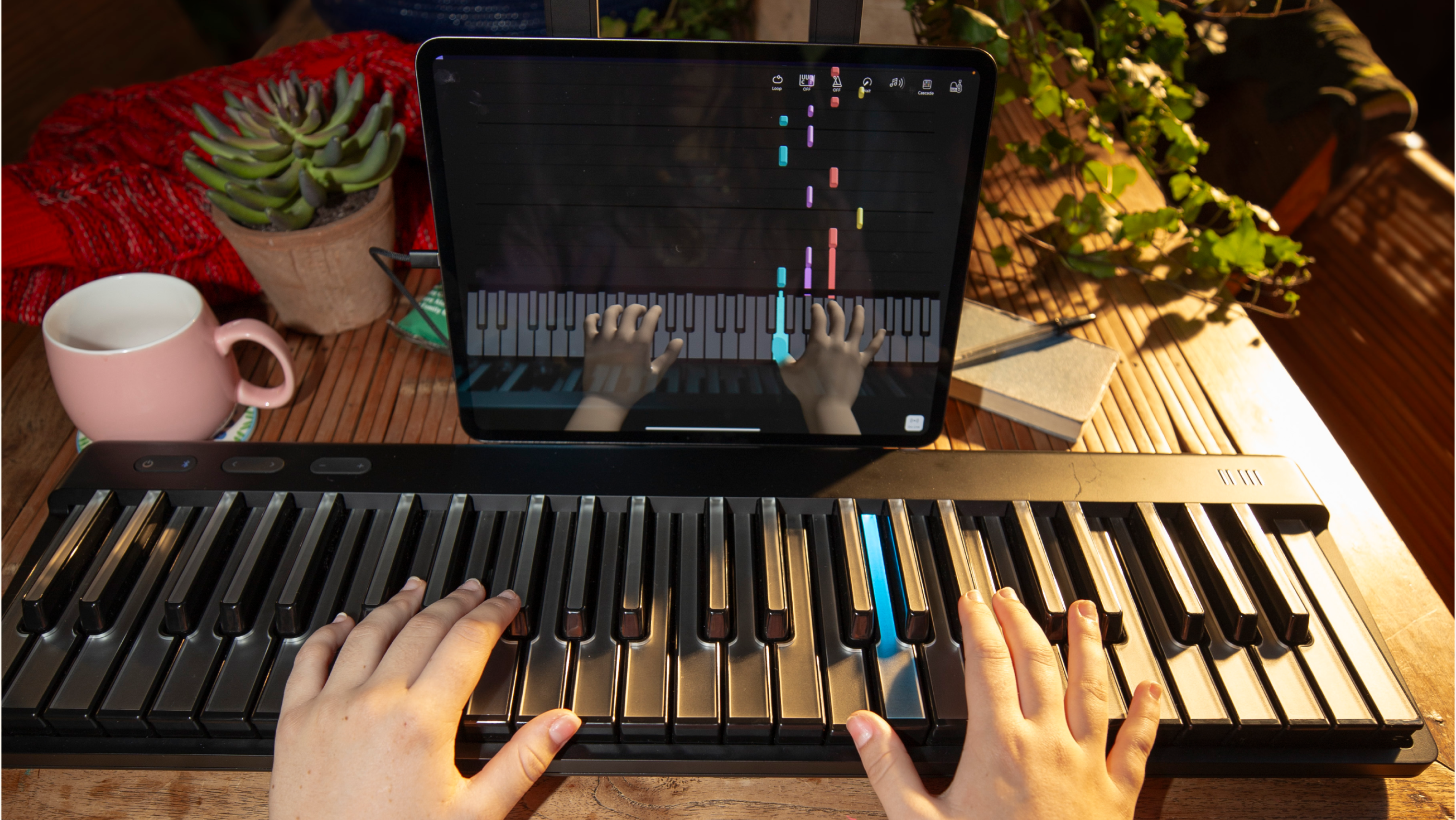
In contrast to guitarists, drummers, singers, and the like, who are often self-taught, the typical path to piano proficiency has historically been through one-on-one lessons with a professional teacher. The importance of learning correct form and technique early on is often cited as a reason for this discrepancy, but with modern technology like ROLI Piano and Airwave, teaching yourself to play is now a valid alternative.
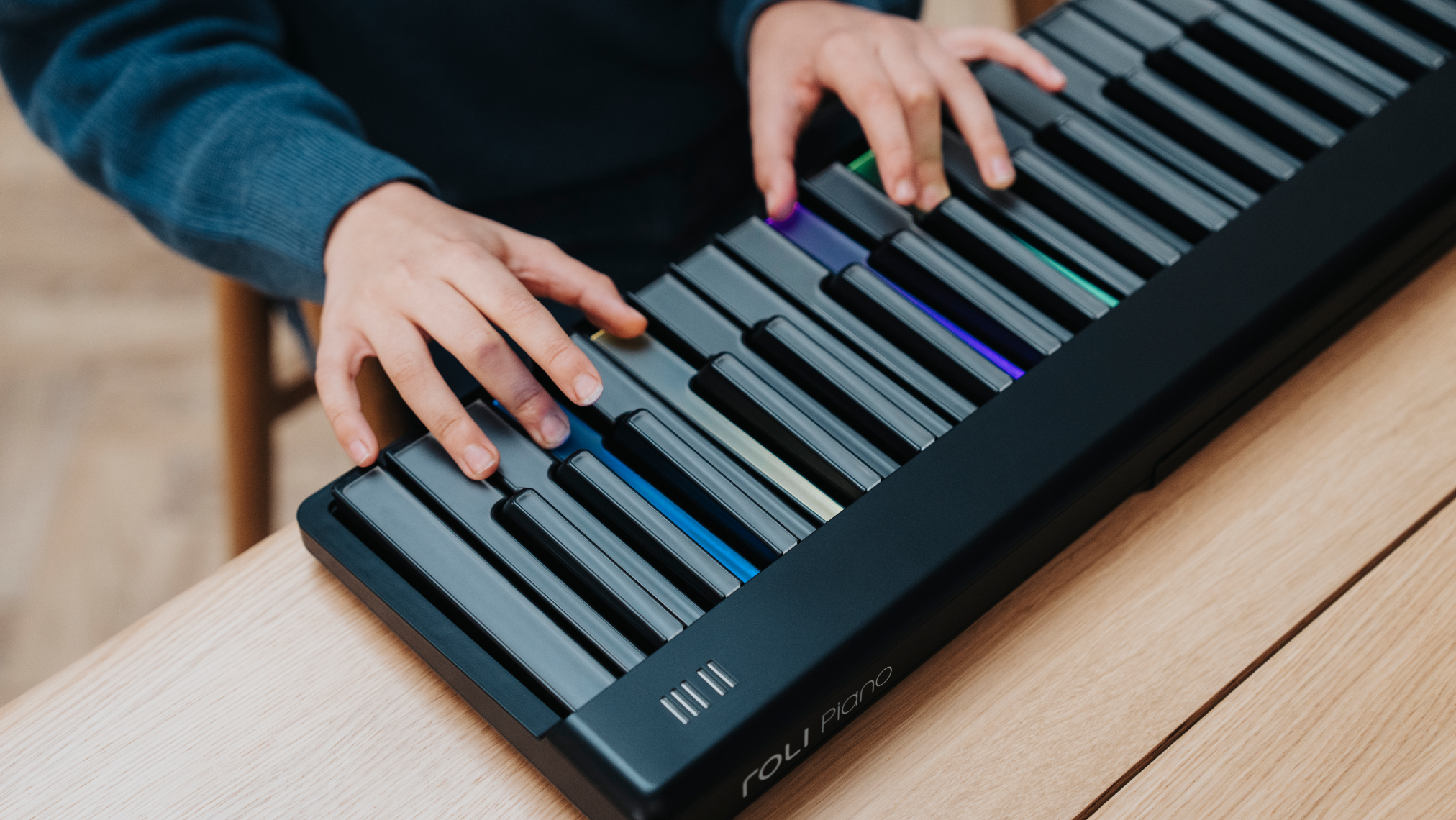
Paired with a subscription to the ROLI Learn app, ROLI Piano and Piano M teach you to play songs from a growing library of 1,200+ classical and contemporary hits. By default, you can follow along without any sheet music knowledge at all. Colored notes cascade video-game style off the screen of your tablet and onto the glowing keys of your ROLI keyboard. All you have to do is hit the right key at the right time.
Many of the most popular songs on the app have simplified versions you can start playing right away, and you’re free to slow any song down and learn at whatever pace feels right for you. It’s hard to pinpoint at what point you can really be said to “play” an instrument, but we’d say you’re very much “playing piano without sheet music” from day one with this approach.
Why modern methods might work better for you
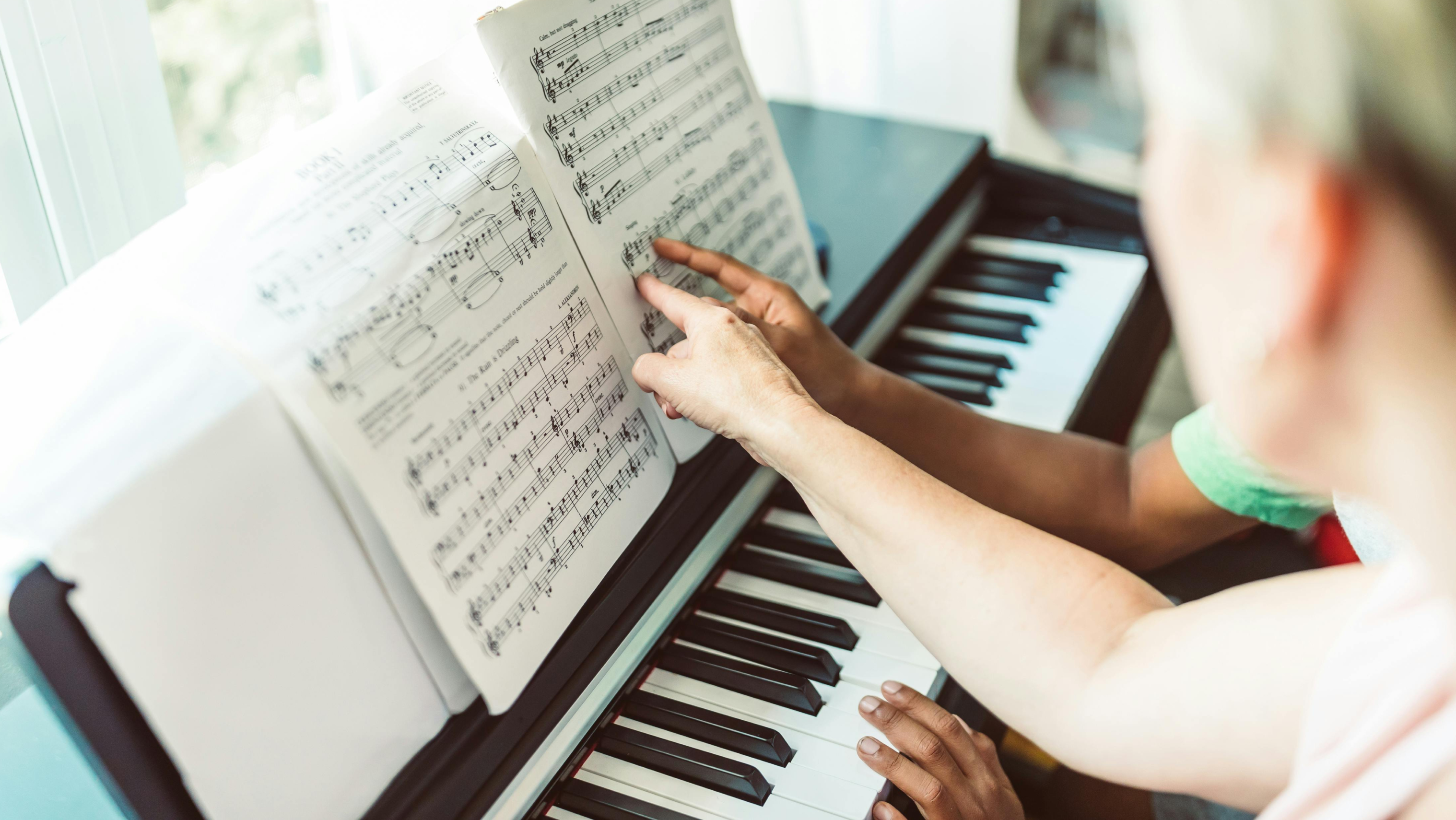
In our experience, many learners find learning with auditory and visual methods like ours to be far more intuitive than studying scores. They present a lower barrier to entry, and help people to get stuck into playing the music they love right away.
And when it comes to the aforementioned form and technique? We’ve got you covered there, too: ROLI Learn features hundreds of interactive video lessons with real teachers designed to teach you playing techniques, practice habits, and essential music theory. There’s also the AI-powered Piano Assistant — a voice-activated virtual practice coach that’s always on hand to answer questions and offer advice.
For the ultimate at-home piano-learning setup, consider adding Airwave. This revolutionary device scans your hands in incredible detail to offer precise feedback on exactly how you’re playing, ultimately helping you learn faster, go further, and have more fun.
Why you might still consider learning sheet music
We’ve established that you can play piano without reading music, but that’s not to say it isn’t useful. Like a language, sheet music is a great way to communicate and share ideas. Even the artists listed above who claim not to read music will have, at one time or another, called in the help of other musicians, arrangers, and orchestrators who did read music.
Sheet music, of course, is even more prevalent in traditional and academic settings. If you aspire to perform in piano recitals or competitions, join an orchestra, or enrol in a conservatory, you will need to get to grips with it eventually.
Once you do, however, you’ll open the doors to many more opportunities. You’ll have the entire history of printed music available to learn, you’ll be able to collaborate with other musicians of all kinds, and you’ll gain a valuable tool for understanding how music really works.
And if you can learn to sight-read — the ability to perform a piece of music accurately while reading it through for the first time — and pair it with playing proficiency, you’ll likely find yourself the life of any party that features a piano from that point on.
What’s the best way to learn sheet music?
Sounds like sheet music is right for you? Great! We suggest you start learning exactly the same way as you would otherwise.
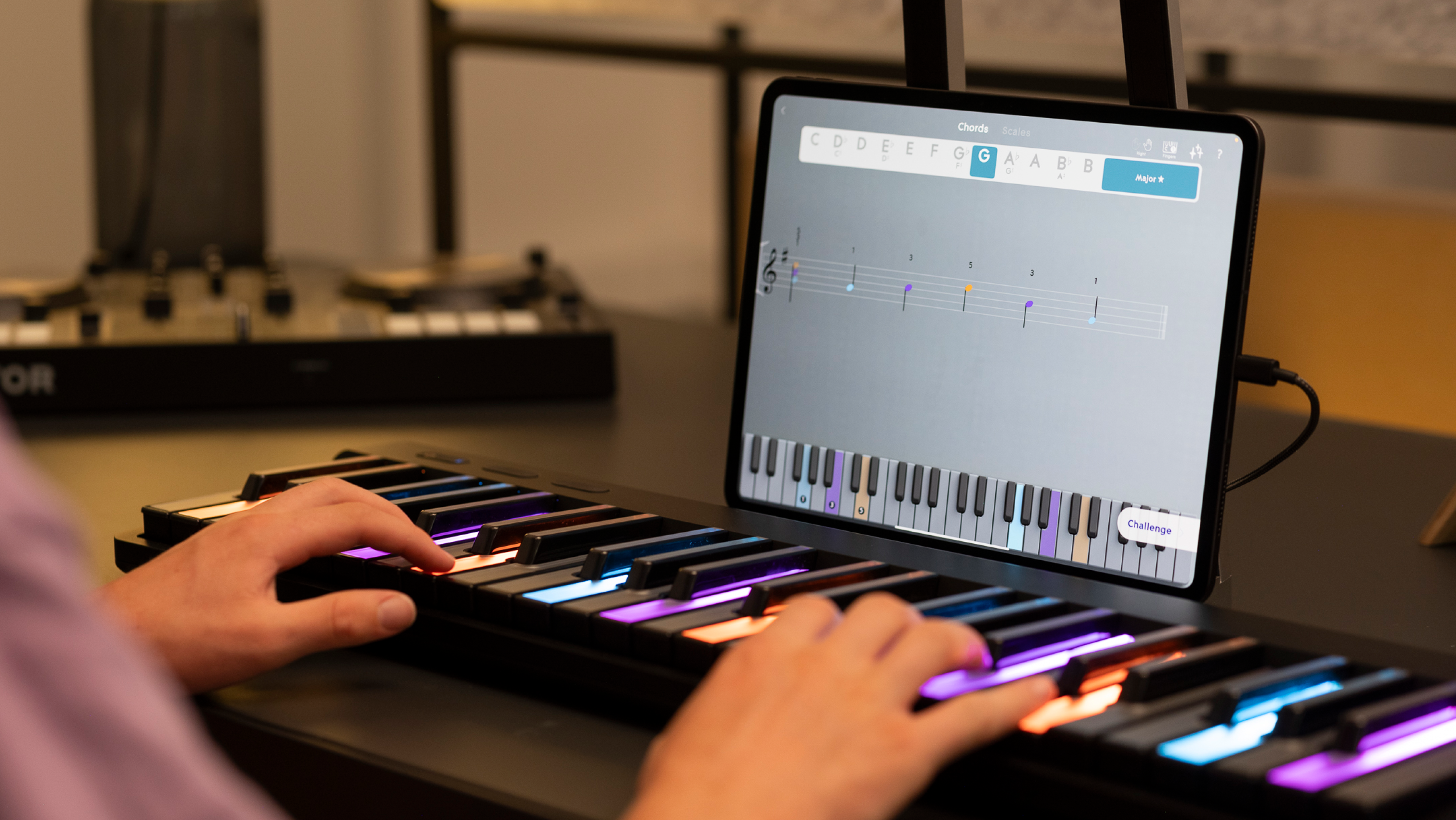
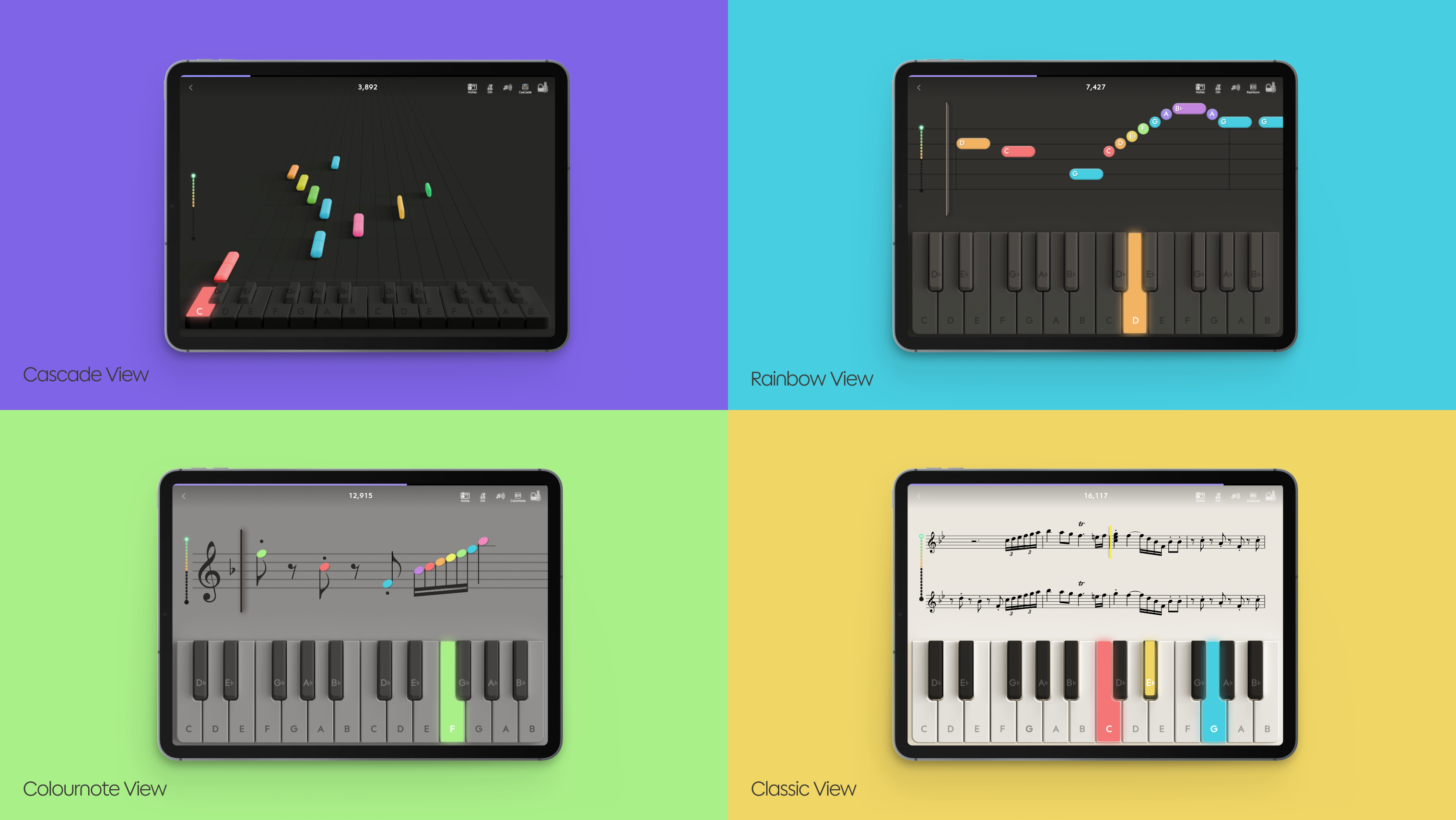
ROLI Learn looks a lot like a video game by default, but it doesn’t have to stay that way. There are actually four playing views, from this initial cascade to traditional, black and white notation, and they’re designed to incrementally introduce the concepts you need to begin reading sheet music.
Cascade View: Video game–style notes cascade off your screen and onto your keyboard. This is Piano M’s default view.
Rainbow View: Looks similar to Cascade View, but the notes scroll past horizontally now — a little like the way you’ll eventually be reading musical notation on the page.
ColorNote View: Now we’re introduced to traditional pitch and rhythm notation, but with additional color-coded hints that build on what we’ve already learned in the previous views.
Classic View: Here’s where we arrive at traditional sheet music. You still have help from the glowing keys, but now you’re following a black-and-white stave instead of a colourful 3D visualisation.
The trick here is to go at your own pace. We believe learning to play means playing to learn, and pushing yourself too hard can be counter-productive. Rather than setting yourself the goal of learning to sight-read, for example, try simply learning to play songs you already love, and revisiting them in different playing views as your skills progress. It will likely feel easier, be more fun, and ultimately get you there faster.
FAQs: Everything you wanted to know about learning without sheet music
Is it possible to learn piano without sheet music?
Yes — in fact, it might be easier. Modern piano-learning systems like ROLI’s can take you from your very first note to confidently playing along with your favourite songs and performing for friends and family without seeing so much as a semiquaver.
Is it better to learn piano without sheet music?
“Better” is subjective and depends on your goals as well as your unique strengths and weaknesses. If you studied a different instrument in the past and already have some knowledge of sheet music, you might find it relatively easy to pick it up again. If you’re starting from scratch, you might find — like many of our learners — that learning with visual and auditory methods feels more natural.
Can I learn sheet music with ROLI?
Yes, if you want to. With the ROLI Learn app, you can work your way through four different Playing Views, progressing gradually from cascading color-coded notes to traditional sheet music in manageable steps. With enough practice, you can play along with all your favorite songs using only traditional notation.
Can I write my own music without learning sheet music?
Yes — ”writing” music doesn’t necessarily mean physically writing it down, and even then you have other options. Some instruments, like guitar, have their own simplified notation known as tablature. Software options like DAWs (digital audio workstations) will often include a “piano roll” that looks a little like ROLI Learn’s Rainbow View and allows you to simply “draw” notes in for any instrument you choose. And you can always just scribble down the names of your notes and chords on a piece of paper.
Do I need sheet music to play with other musicians?
Not necessarily. Many successful musicians have never learned to read a note and collaborate with other artists all the time. It all depends on your goals: If you want to join an orchestra, sight reading skills will be expected. A rock band? You’re probably fine without.
Start your piano-learning journey today
Ready to take your first step towards learning sheet music — or learning to play without it? ROLI Learn gives you access to an ever-growing library of hit songs, hundreds of video lessons, and a host of engaging musical games and exercises from just $8.33/month.
You can choose between learning with Piano M for the most portable setup possible, or our flagship ROLI Piano for instant access to two-handed songs and lessons. Add Airwave to either combination to power up your piano learning with personalised progression and detailed feedback on your playing technique.
Suggested articles
10 easy piano songs for beginners
28 new two-handed lessons in the ROLI Learn app

Join the ROLI community