New Year, new you: beat the brain rot
How doom scrolling derails your piano learning — and what you can do about it
2026 beginning to drag already? Run out of resolve for your resolutions? Just generally feeling frazzled? The New Year may traditionally be a time for fresh starts, but that’s easier said than done when you aren’t feeling too fresh yourself.
The good news is that you’re not alone — and you’re not just imagining it. If you’re anything like the average person, you’re spending upwards of six hours per day staring at a screen. The figures skew higher for younger people and, we’re willing to bet, people who click on blog posts about doomscrolling.
So prevalent is this state of affairs that Oxford University Press named brain rot — a word that describes both low-quality online content and its effects on those of us who consume too much of it — it was word of the year in 2024. And things haven’t exactly improved since then.
It’s very much a real problem: excessive screen use is associated with, among other things, cognitive impairment, reduced problem-solving skills, and decreased ability to think creatively. It’s also been linked to elevated levels of depression, anxiety and mood disorders, and even physical issues like vision impairment, sleep disruption, and back pain.
Since none of these things are remotely helpful for learning piano, we thought we’d take a closer look at the problem and try to identify some potential solutions. We can’t promise any quick fixes, but there are plenty of things you can start doing today that will help you reclaim your brain and free up some much-needed mental capacity — so read on for our top tips.

What does excessive screen use do to our brains?
If you find yourself identifying a little too strongly with the above, there are likely a few things going on. Sure, you’ll struggle to find time to learn piano (or anything else) if you’re spending every waking hour on TikTok, but the problems run deeper than that.
There has been plenty of research studying the effect of excessive internet use on both children and adults. Among the physical changes noted are reduced connectivity between brain regions, lower white-matter integrity, growth of both white and grey matter, and even verbal IQ.
Of particular interest here, however, is the effect on the brain’s reward system. When it’s working correctly, this part of your mental circuitry is responsible for associating various stimuli with positive outcomes. It does this by releasing a neurotransmitter called dopamine into the nucleus accumbens — your brain’s pleasure center — whenever an activity is perceived as beneficial.

Crucially, dopamine isn’t only released when a behaviour leads to a good outcome, it’s also released in anticipation of a good outcome. In this way, it plays a crucial role in motivation, as well as pleasure, movement, mood, attention, and learning — among other mental and physical processes.
It’s easy to see how this circuitry worked in our favour back when we lived in caves and food and other resources were hard to come by; if you found and ate some tasty, nutritious, and non-poisonous berries, for example, your brain released a hit of dopamine, motivating you to go and find more and potentially helping you to survive. In a time of Instagram, Playstation, Netflix, and Uber Eats, however, it’s prone to misfiring — or even being hijacked.
Over time, the constant little hits of dopamine generated by things like social media, streaming services, video games, train our brains to crave fast, repetitive rewards. When these things can be accessed at any time, without effort, and essentially for free, other activities, including those we may genuinely want or even need to do, can seem like too much effort. Getting started can prove difficult, and staying focussed can feel impossible.
The above is a simplified overview of one aspect of the difficulties that doomscrolling can cause for something that requires as much effort, motivation, and attention as learning to play piano. Excess screen use is also implicated in reduced sleep quality, which impairs self-control and memory formation. There’s evidence to suggest that it trains rapid attention switching, making sustained effort more and more difficult. And in children, it’s linked to underdevelopment of the prefrontal cortex, a key area of the brain for both attention and executive function.
The science is clear: doomscrolling has the potential to severely disrupt our ability to motivate ourselves, pay attention, and learn. So what can we do about it?
Five brain rot-busting tips for piano learning
Ready to regain your attention span? Here are some tried and tested (and science-backed) ways to boost your brain and get back on track with learning piano in 2026.
Start the day right
Good news for procrastinators: you can start tomorrow. Our brains follow the same circadian rhythms as the rest of our body, maintaining different levels and ratios of neurotransmitters at different times of the day. Dopamine spikes early on in the day, priming you for learning and generally getting stuff done. It also leaves you susceptible to some of the pitfalls above. It’s particularly easy to get into bad habits like mindless scrolling first thing in the morning, for example. And for the first thirty minutes or so after waking, sleep inertia makes it harder than usual for us to make good decisions.
To combat this, you could try creating a bit of space between you and your devices, perhaps by leaving them in a different room while you sleep, or at least out of arm’s reach. You might also consider getting outside early on, as exposure to sunlight in the morning has been shown to further increase dopamine levels and improve your mood to boot.
Our advice? There’s no better time to squeeze in some piano learning — just try not to wake everyone else.
Keep your learning space distraction-free
In the same way as keeping your phone away from your bed can stop you reaching for it as soon as you wake up, keeping it — and any other distracting devices — as far as possible from your piano-learning setup can add some much-needed friction to the process of distracting yourself.
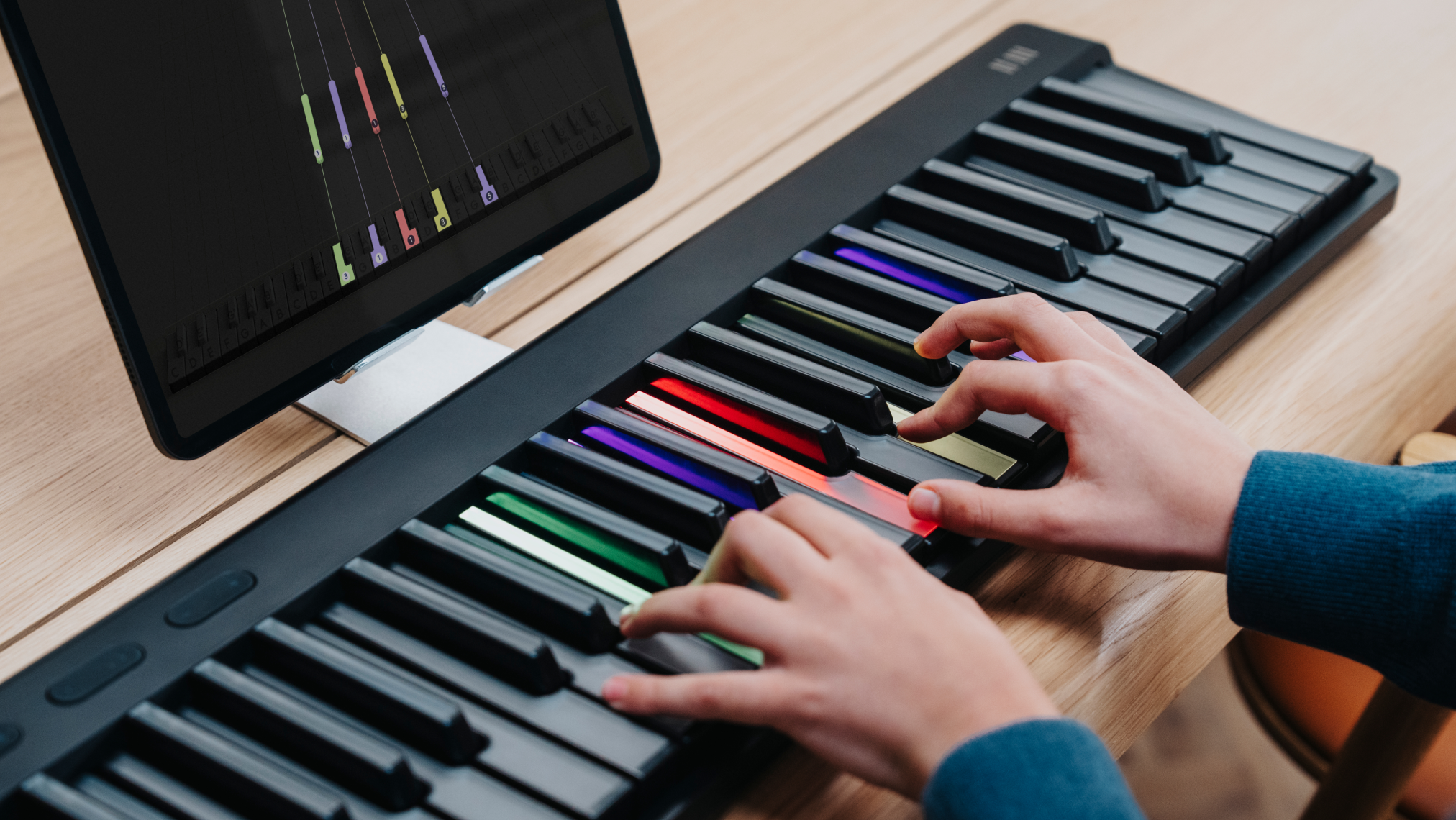
By the same token, you want to reduce the friction involved in actually sitting down to play. Where space permits, we recommend leaving your ROLI Piano or Piano M charged and ready to play in its usual spot. If you can (and if you’re trying to break a scrolling habit anyway), you might want to leave your device with it — that way you’re just a couple of taps away from learning a new song, practicing an old favourite, or brushing up on your musical knowledge with a game or exercise.
Albert Einstein, an accomplished pianist himself, once asked, “If a cluttered desk is a sign of a cluttered mind, what, then, is an empty desk a sign of?” He did have the benefit of literally being Albert Einstein, though — for the rest of us, it pays to keep things neat and tidy. Clutter itself can have a negative impact on our ability to learn, both by saturating our working memory with irrelevant visual information and by causing stress that subdues our ability to resist impulsive behavior.
Set limits on your screen time
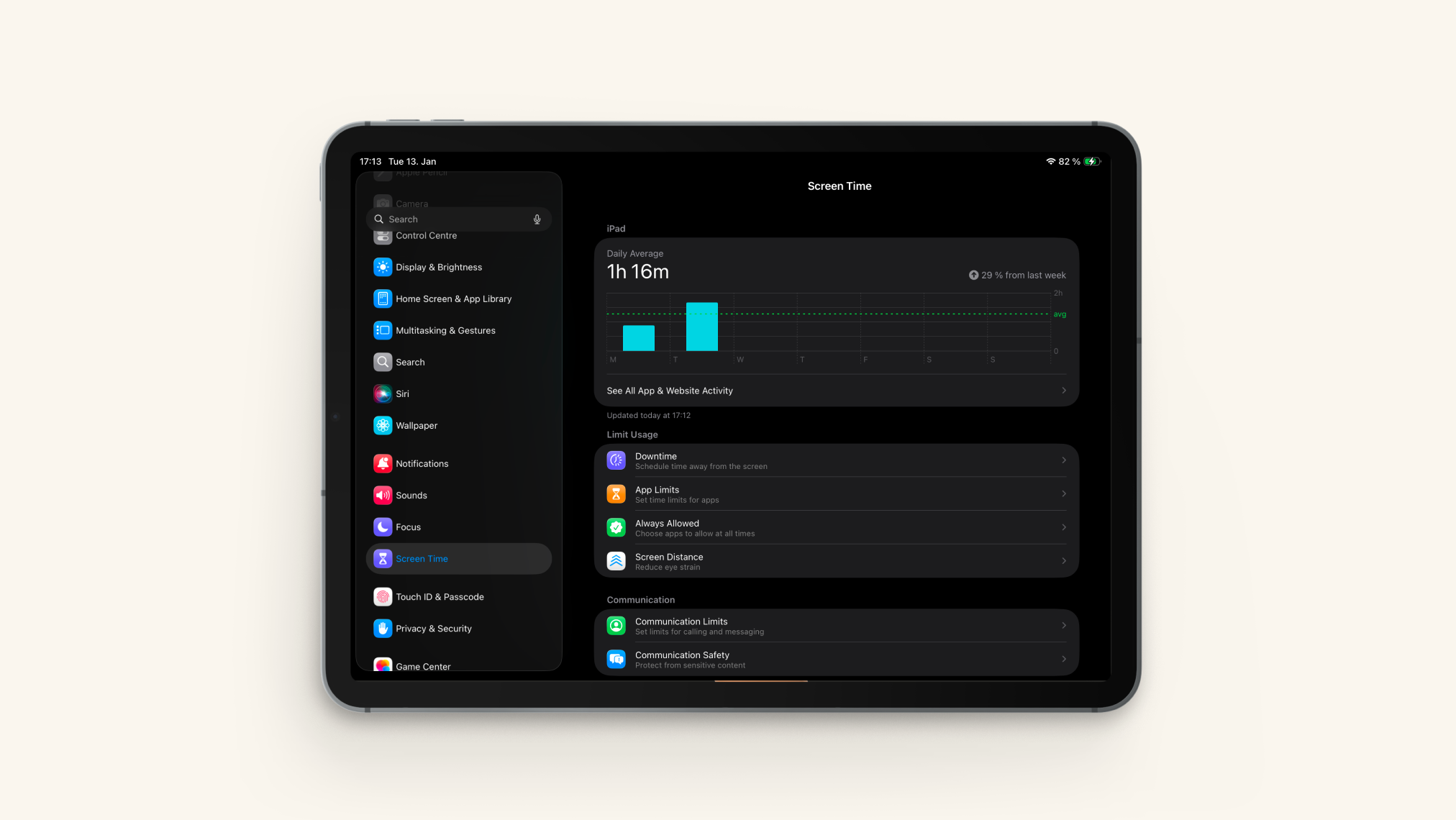
They say you can’t improve what you can’t measure. Thankfully — or horrifyingly, depending on your perspective — our digital devices measure just about everything nowadays. If you’re using an iPad or iPhone, you can check your screen time from the Settings app. Android devices work similarly, with the same sorts of stats available under Digital Wellbeing.
Take a deep breath, take a peek at your numbers, and establish your baseline. Bear in mind that there’s no “right” number to aim for. Everyone is different, and there are plenty of valid reasons to spend significant amounts of time using our devices, not least for work, for staying in touch with family and friends, or indeed learning piano.
If you’ve read this far, though, you probably do want to cut down a little. Modern Apple and Android devices all have built-in tools for limiting the time you spend using specific apps or websites, all accessible from the sections mentioned above. We recommend browsing through your data, figuring out what healthy usage looks like for you, and setting yourself some limits.
Can you just go back to the settings and turn them all off again when you feel like scrolling some more? Sure, but adding a little friction will at least give you some time to think about whether or not you really want to.
For anyone wondering, the “rookie numbers” above are from a rarely-used iPad — my total screen time across all the other devices is far, far worse.

Give your brain what it needs
Some advice is given so often it’s become a cliche — but that might just be because it works. We’re wrapping up our list here with some classic examples. In much the same way as a houseplant needs sunlight and water to thrive, the human brain has some basic needs that are easily forgotten. You’re going to want to keep yours topped up with the following:
Hydration: Aim for the equivalent of 8+ glasses of water per day.
Sleep: 7-9 hours of good-quality sleep per night is about the right amount for most of us.
Exercise: Around 150 minutes of moderate activity per week has been shown to improve brain health and may help prevent cognitive decline.
Nutrition: Try to eat a balanced diet, with particular attention to key nutrients lite Omega-3 fatty acid, antioxidants, B and D vitamins, and protein.
Light exposure: As mentioned above, getting out in the sun within 30-60 minutes of waking triggers dopamine release, increases energy levels, and helps keep your circadian rhythm in check.
Want to beat the brain rot and boost your mental power through music this year? Discover the ROLI Piano System.
Suggested articles
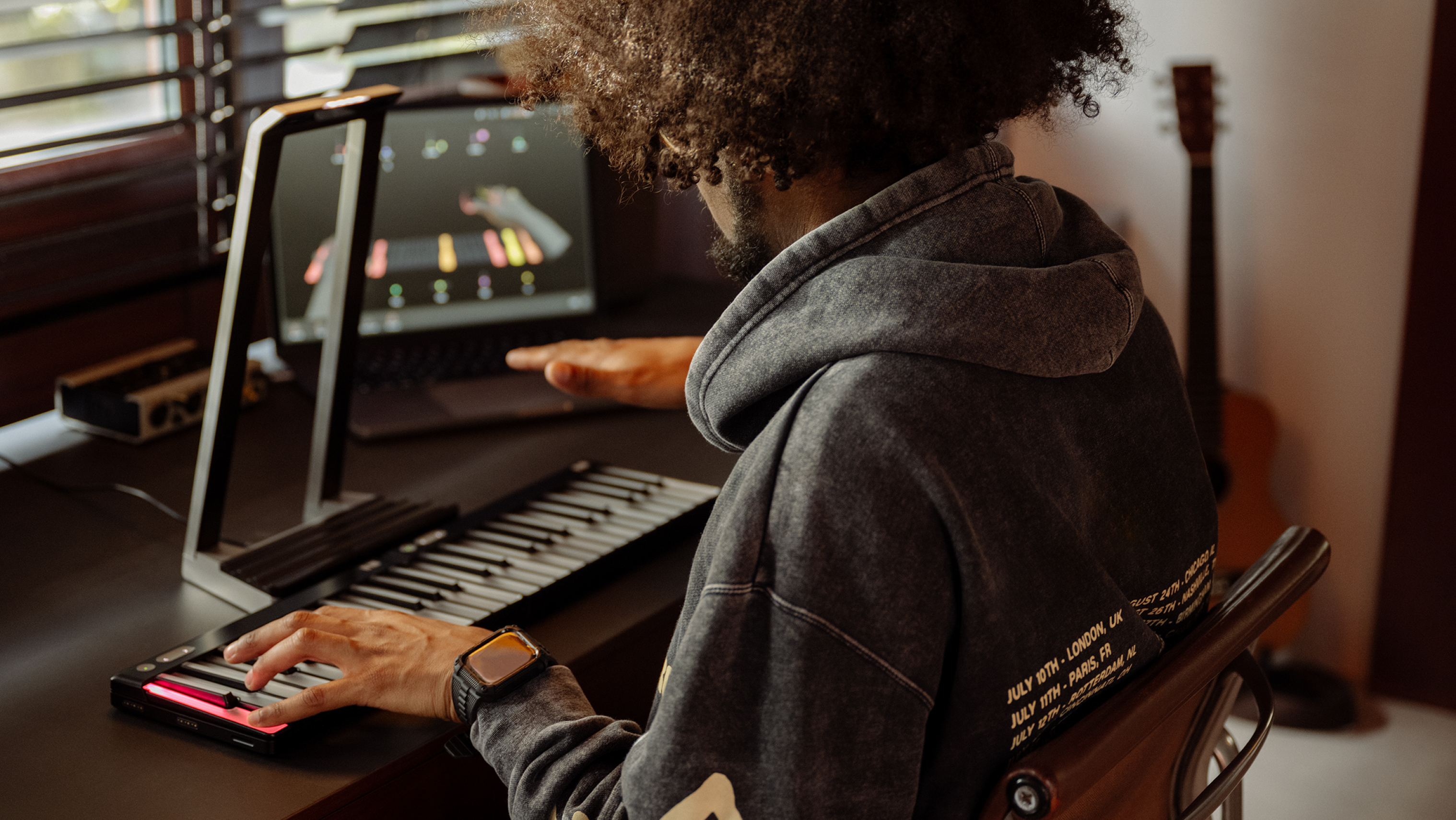
New year, new you: How to set and reach your musical goals in 2026

New year, new you: How to make 2026 the year you finally learn piano

Tips for overcoming skill plateaus in piano learning

7 reasons why learning piano together is good for families
Why traditional piano learning fails in 9/10 cases
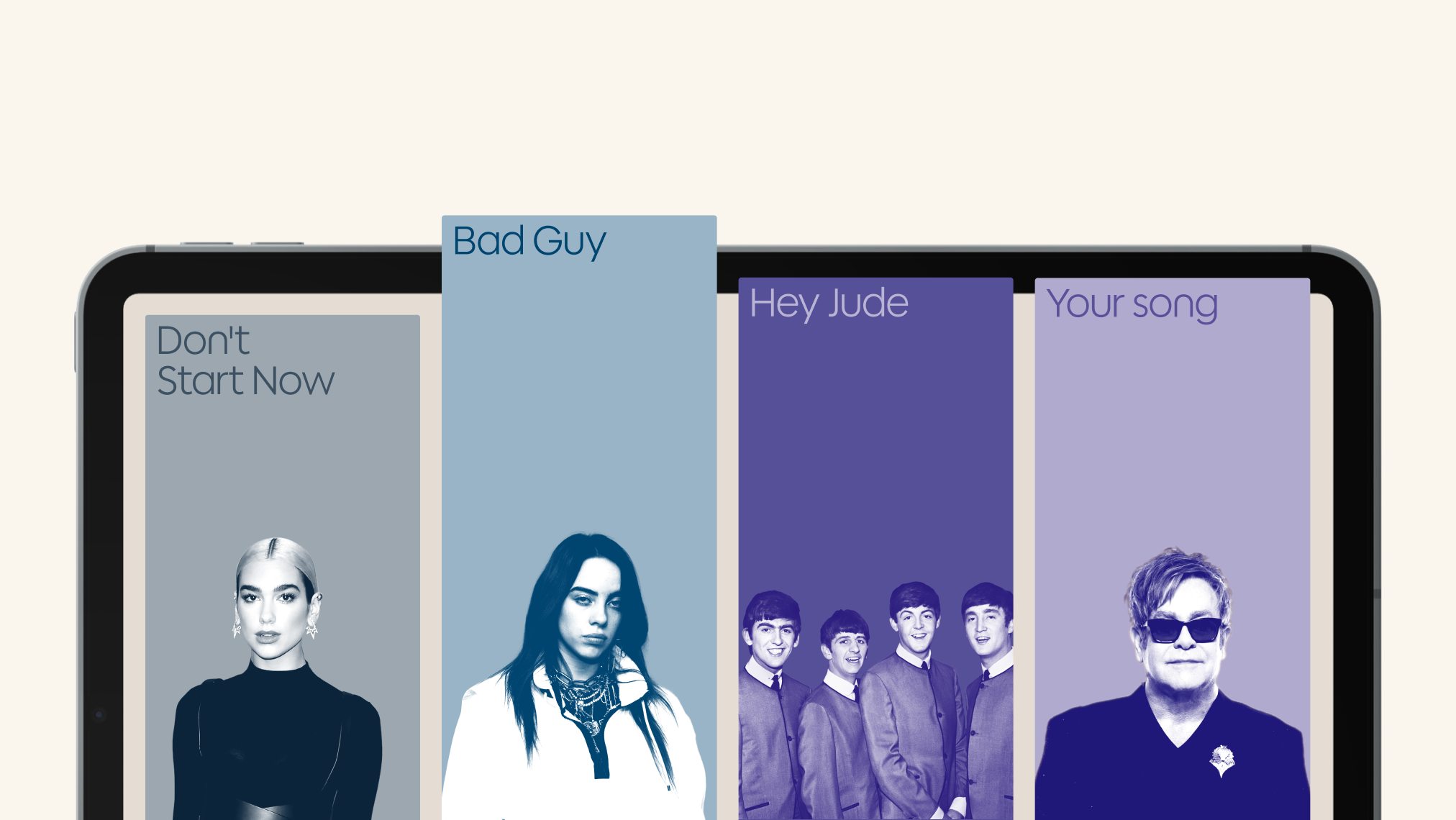
10 easy piano songs for beginners
Join the ROLI community