New year, new you: How to make 2026 the year you finally learn piano
We break down some SMART ways to make the next 12 months your most musical so far
For the musically inclined, the New Year is often a time for optimism. “This is my year,” we tell ourselves, resolving to finally pick up the instrument that’s been gathering dust, crack open that daunting theory book, or tackle a tune that’s been tantalizingly out of reach for a little too long.
Statistically speaking, though, we’re probably not going to do any of those things. At least not past the end of January. So what can we do to make sure it really is our year this time around?
The answer to that, in our experience, is one you’ve likely heard before (and may even be a little sick of hearing). But bear with us. SMART goals, derived from the world of business, have become as widespread as they are for good reason — they work. Even for those of us engaged in more creative endeavors.
Below, we’ve broken down the five tenets of SMART goal setting and explored what they might mean for us as piano learners. Read on to give yourself the best possible chance of setting and sticking to the right piano-learning goals in 2026.
Specific
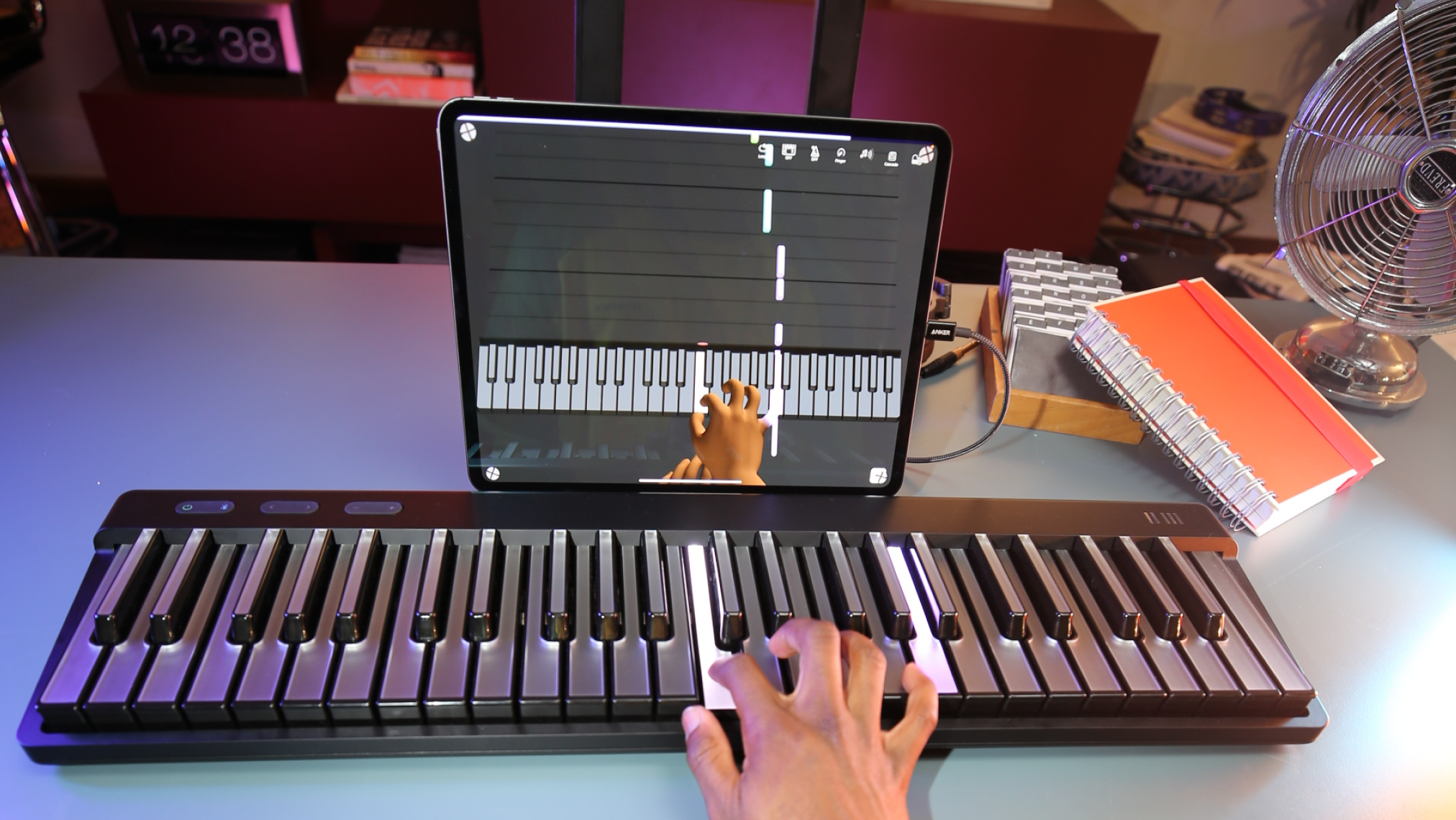
When it comes to learning piano — or any instrument— this is arguably the big one. Sure, we all want to “learn piano”, but what does that actually mean? For some, learning to play simply means fumbling our way through a favorite song without too many mistakes. For others, it might be the confidence to tackle that same song for an audience of friends and family. You might have your sights set on bigger stages and true mastery of your instrument.
All of the above goals are valid, and — given enough time and dedicated practice — achievable. But it pays to know what you’re aiming for. If you’re reading this post, there’s a decent chance you have “learn piano” penciled in as a New Year’s resolution already, but we’d advise you to grab an eraser and consider getting a little more specific instead.
Consider the following:
“Learn to play “Golden” from KPop Demon Hunters.”
“Learn and memorize five new major scales.”
“Learn two-handed parts to three of the songs I already know.”
Measurable
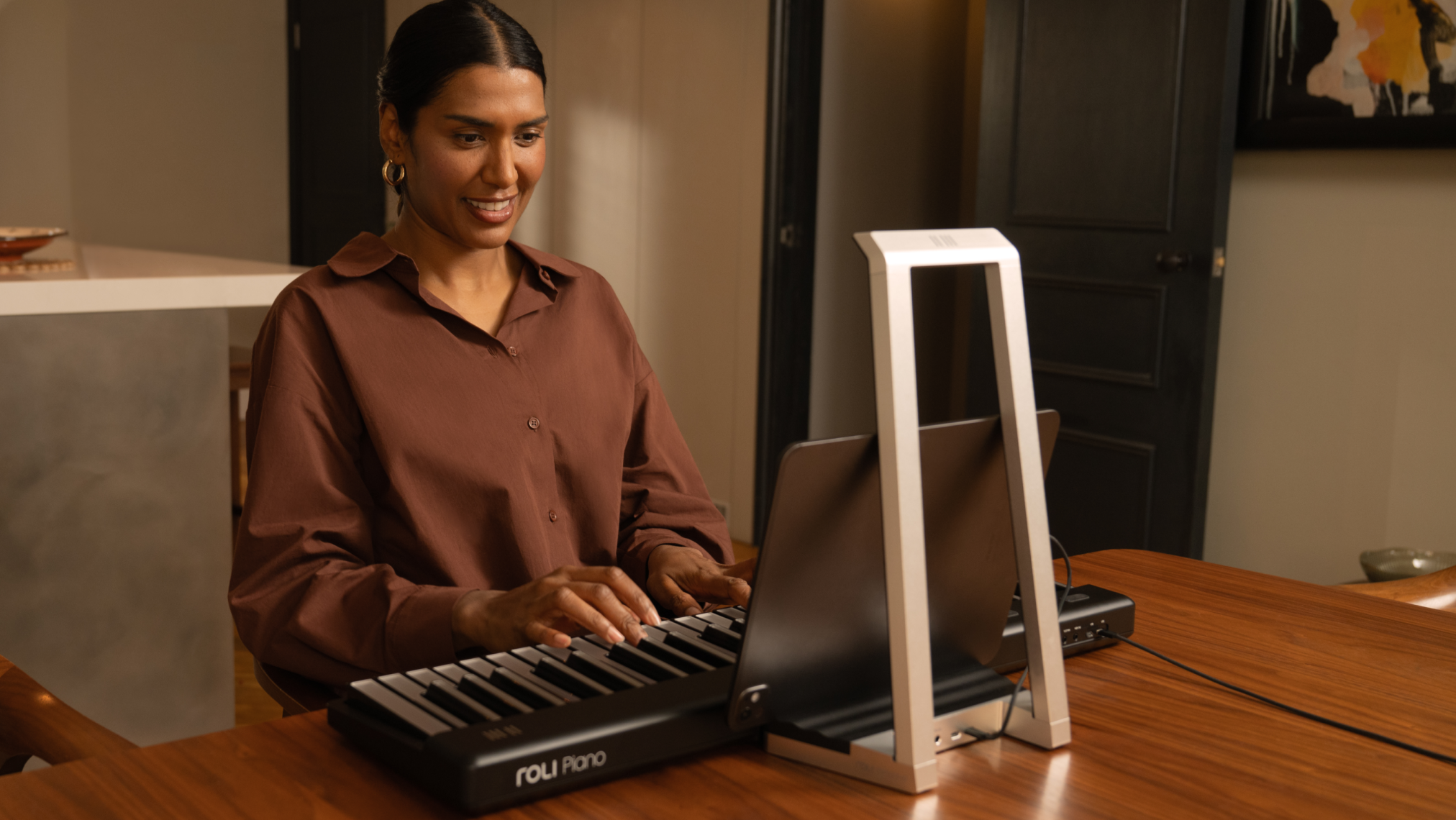
Let’s adapt another prominent idea from the world of business: “You can’t manage what you can’t measure.” That is to say, you need some sort of criteria to judge your efforts against. Firstly, and most obviously, you need to know when you’ve achieved your goal, but there’s also value in setting them in such a way that you’re also able to keep an eye on your progress throughout the year.
If you’re learning with ROLI, this idea is baked right into the system you already use. The ROLI Learn app tracks your progress through songs and lessons for you, making it easy to see how you’re doing, where you’re making improvements, and what you still need to work on. Add Airwave to your setup, and you’ll get even more precise feedback on how you're performing against various dimensions of piano progress.
When setting your own goals, with or without the help of the app, be sure to consider how you’ll track your progress throughout the year. Goals you can measure include:
“Learn five new songs.”
“Learn piano for at least ten minutes per day” (the ROLI Learn app can track this for you)
Or, if you have Airwave, “Get three stars for both position and posture across five different songs.”
Achievable
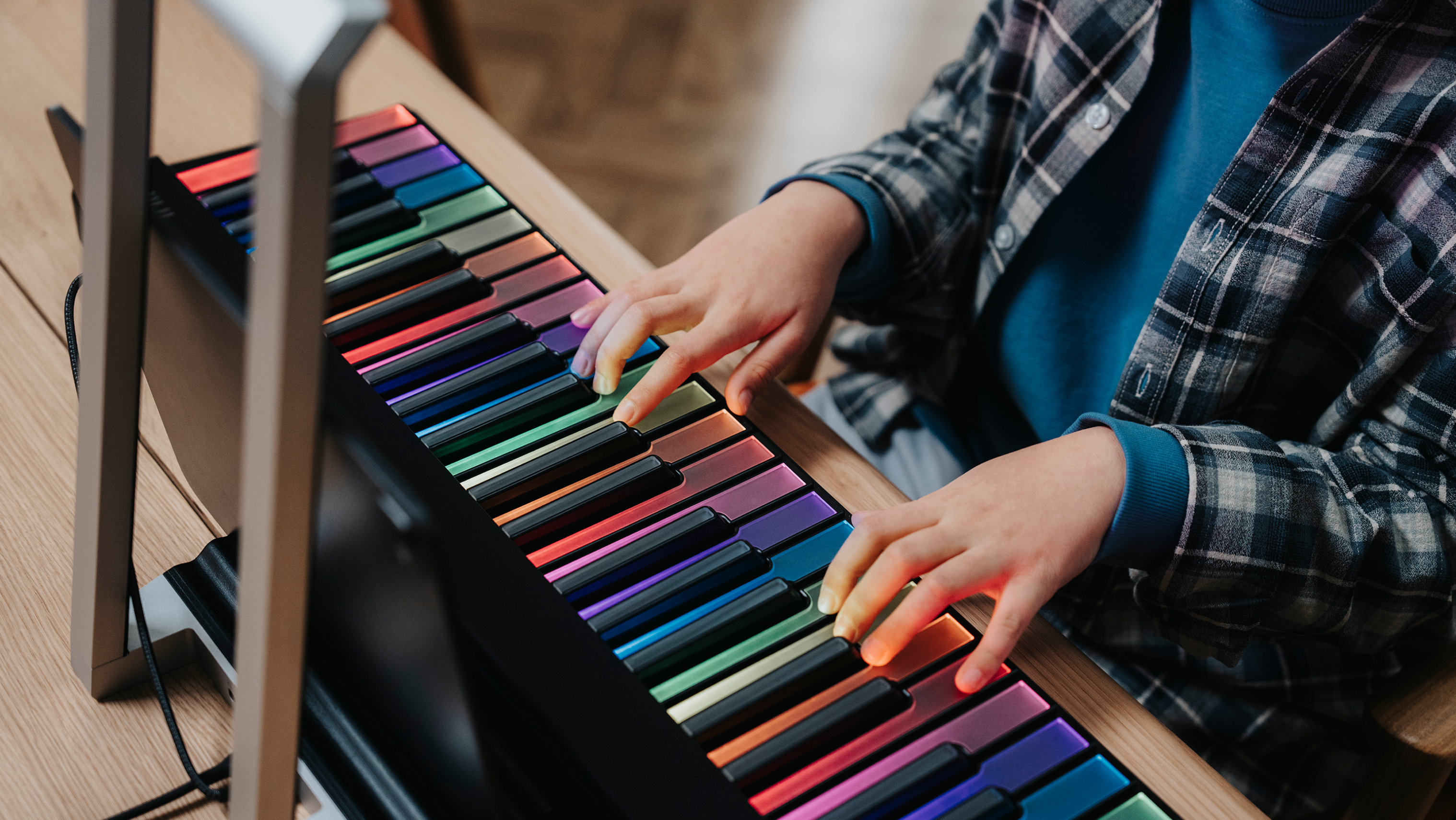
Firstly, and most importantly, whatever your goal is, we believe in you — you got this! With that said, the best New Year’s resolutions are the ones that push us, but that deep down we know are possible.
If you’ve never played a note before, this absolutely can be the year you learn to play your favorite song. We’ll bet you can learn lots of your favorite songs, in fact. Are you going to win a competition with your playing, or have a number-one hit? Maybe those are best left for another year.
Nobody knows what you’re capable of better than you do (and even then, you’re likely underestimating yourself). Our advice? Pick something that seems like you could reasonably pull it off one year from now — and then make it just a little bit harder.
Here are some totally reasonable goals for anyone picking up the piano for the first time, each with a tricky twist that makes for a satisfying challenge:
“Play my favorite pop song — without making any mistakes.”
“Learn five different songs and play them, from memory, on a real piano.”
“Secretly learn my friend/relative/partner’s favorite song, and then surprise them by playing it.”
Relevant
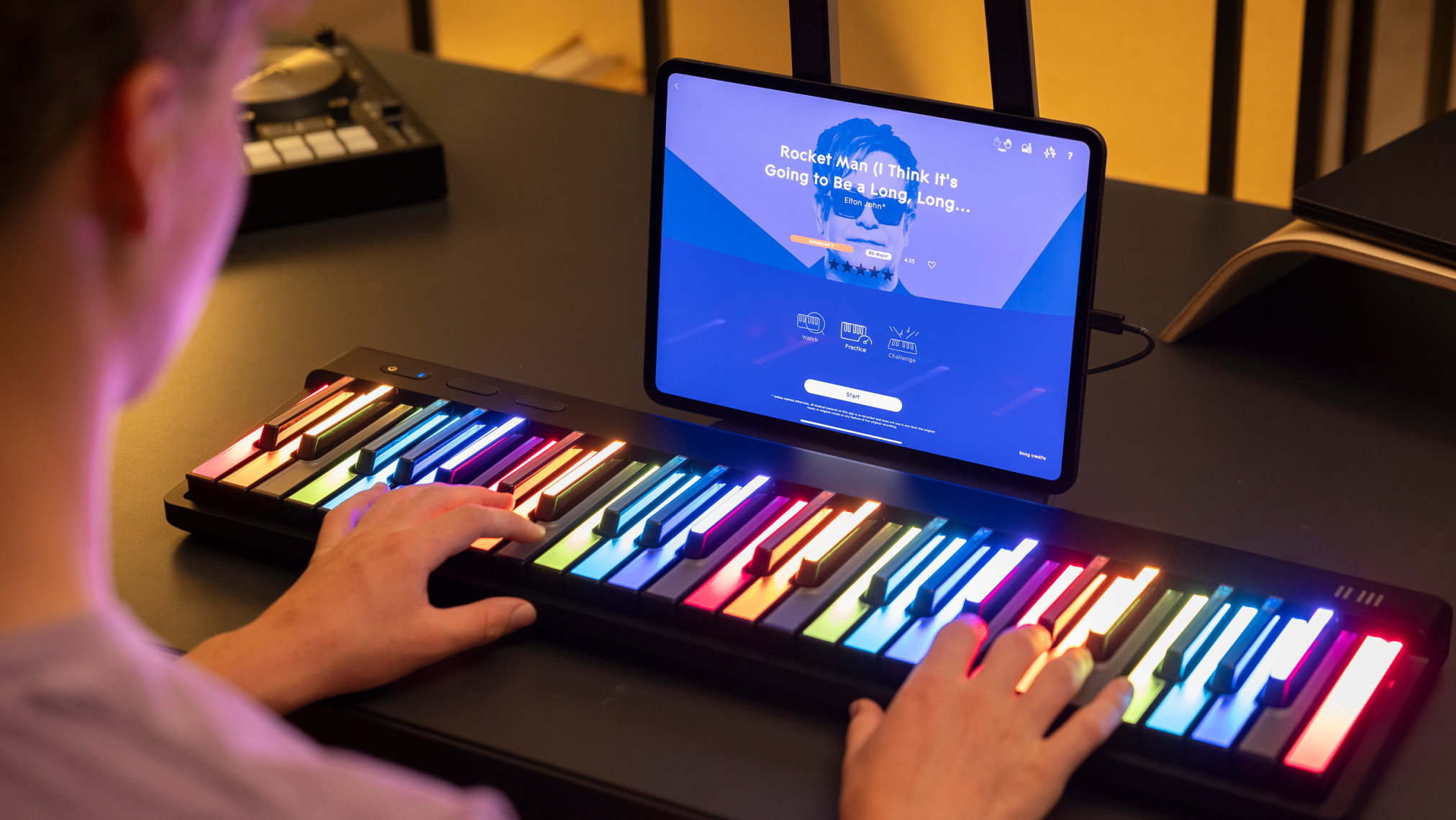
If you’re setting yourself several different goals, it can be useful to think of them all as components of a bigger goal. If you want to learn a particularly tricky song by the end of the year, for example, you might break that down into learning specific sections by a specific date, or by memorizing the scale it uses to practice your fingering.
Doing this makes sure that all the little things we do are “pulling in one direction” and helping us achieve our more ambitious aims. We can think a little bigger with this, too. Ask yourself, for example, “What kind of piano player do I want to be in 2027? 2028? Beyond that?”
If you dream of performing a wide repertoire of classical music, for example, you’d be well served by brushing up on theory, practicing scales, and progressing through ROLI Learn’s playing views to learn traditional notation. Just learning music you love for your own enjoyment? There’s no reason you can’t just pick a song and play — the rest is optional.
“Memorize every major scale” is likely unhelpful if you just want to play Beatles songs
Likewise, “Learn three Beatles songs” isn’t likely to motivate you if you don’t like the Beatles (there’s over a thousand other songs to choose from in the ROLI Learn library)
If you dream of writing your own music one day, learning a little theory now and practicing scales in between picking up new songs will serve you well for years to come.
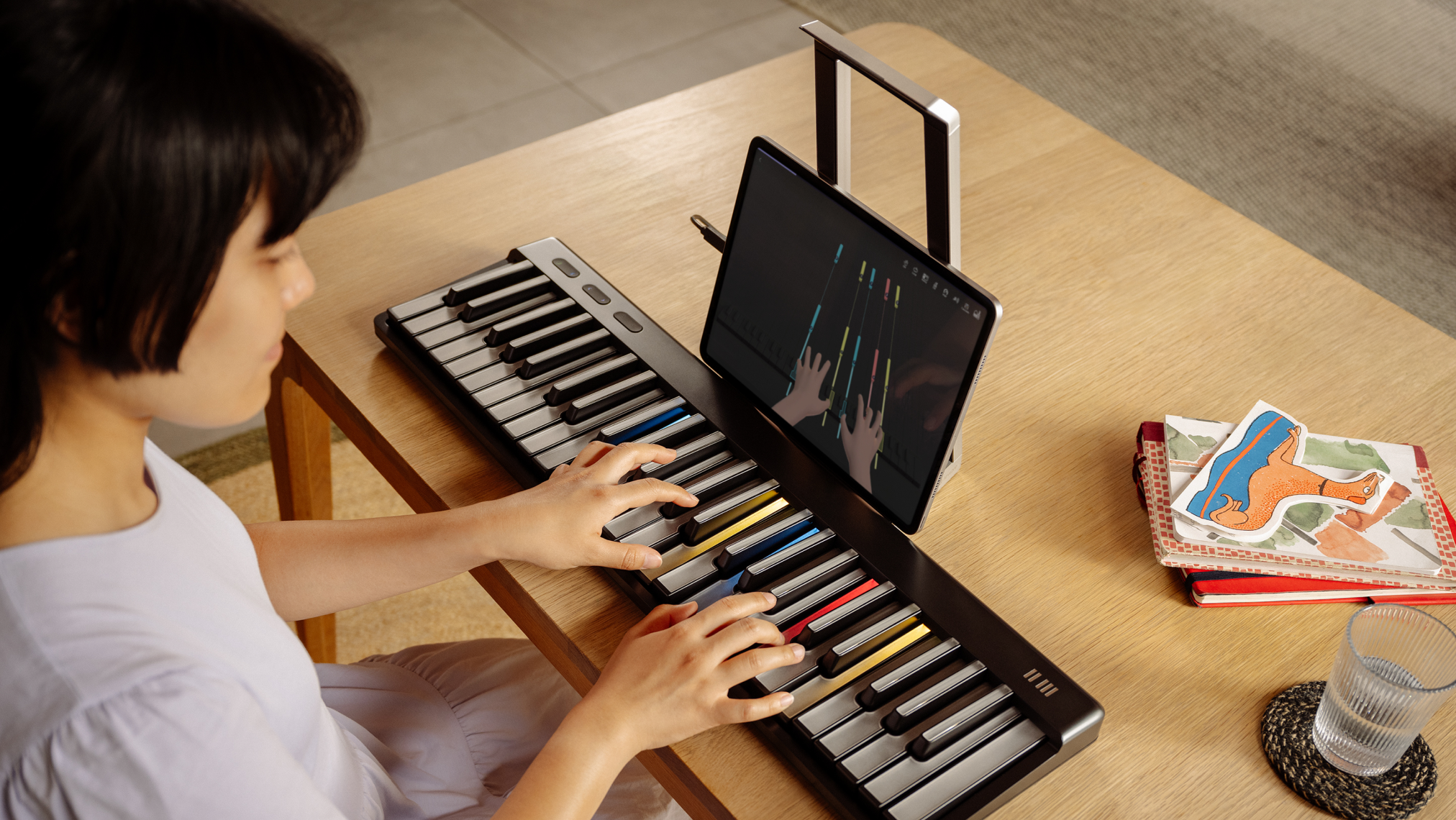
Time-bound
For the big goals, this one takes care of itself. Deadline: 2027. But add a dimension of time to the techniques above, and we can really start to map out our own routes to success.
Setting out to learn ten new songs in 2026? That’s around five weeks per song‚ giving you more than enough time for each. So why not stick a few notes in your calendar to check in and see how far you’ve come? You could even plan out the songs you want to learn in advance, giving yourself something specific to look forward to as you check off each challenge (and there’s no rule against adding in new goals if you find you’re progressing faster than expected!).
It’s also worth considering any plans you have for the year that might provide opportunities to test yourself – a little pressure can be a great motivator. Have a family gathering coming up, and feel like showing off? Mark the date and count backwards to see what you’ll need to learn by when.
Here are some great time-bound goals:
“Learn my Mum’s favorite song in time for her birthday.”
“Have three Christmas songs ready to play in time for the holiday season.”
“Challenge myself to complete one song, exercise, or lesson every Sunday evening.”
New year, new gear?
Want to make the best possible start on your piano learning journey in 2026? There’s still time to pick up our flagship ROLI Piano at a special introductory price.
Join the ROLI community