Paul Leonard-Morgan on following his instincts and scoring 'Pretty Lethal'
“You've got to start somewhere, and you start by just doing your own thing.”
Paul Leonard-Morgan is a composer of many colors. The BAFTA award-winning and Ivor Novello nominated Scottish composer boasts an expansive list of credits, including sci-fi films like Limitless and Dredd, TV series Watson, video games Cyberpunk 2077 and Warhammer 40,000: Dawn of War III, music for theatre, ballet, and production for countless bands in the Glasgow music scene, each celebrated for his distinct ability to fuse classical instrumentation with electronica.
“There was something about film and TV. It just had that magic, that wonderful moment where the two just marry up the visuals and the music.“
Music entered Leonard-Morgan’s life early on. ‘My mum is a wonderful flute and piano teacher,’ he recalls. ‘She taught me the piano when I was about three, and I would always play piano and recorder.’ As Leonard-Morgan matured, he attended the Royal Scottish Academy of Music, now known as the Royal Conservatoire, where he studied film music. It wasn’t a conscious decision per se, but something he discovered a passion for through his ceaseless obsession with music. ‘I didn't know what I wanted to do; I just knew that I had always written music,’ he tells us. ‘I mean, literally, I was a geek. When I was 11 or 12, my mum and dad had pictures of me lying on a beach just writing music on sheet music. And someone said, “Oh, the Royal Scottish Academy of Music's got this wonderful new film music course, you should go up there”.'
‘I remember hearing Gabriel’s Oboe from The Mission by Ennio Morricone and just going, “Man… I adore this. You can write beautiful melodies, oh my goodness, and it fits the picture!” I don't just write music for film and TV – I do theater, I do games, produce bands, and I'm writing a ballet at the moment, but there was something about film and TV. It just had that magic, that wonderful moment where the two just marry up the visuals and the music.’
In Leonard-Morgan’s later work with bands, including string arrangements for Isobel Campbell of Belle & Sebastian and her albums with Mark Lanegan, as well as working with Mogwai, Texas, Simple Minds, and a remix for Snow Patrol, his musical capabilities further grew. ‘I was classically trained while I was at the Conservatoire, and Glasgow had this really thriving music scene, so I ended up just working with bands doing string arrangements. I was known as The Classical Dude, “Oh, there's Paul, he's trained classically”. So I’d do string arrangements for bands. And then from the string arrangements, I started producing them. The bands liked the fact that I was doing films, and the films liked the fact that I was working with bands, and that's really how it got started.’
With such a diverse body of work, we were curious to know more about how Leonard-Morgan approaches each genre. When scoring dramas and long-running TV series, the focus is on evolving themes while developing a sonic palette to draw from.
‘You can't just keep on using the same material, because otherwise it's just gonna get so boring. I'm in the middle of Watson at the moment, which is a 20-parter for CBS and Paramount+. You have themes for different characters, but I think mostly, you come up with a palette. Every time Watson appears, or he meets Sherlock, there's a big string theme, whereas when they're in the medical drama part of the episode, I've got these real big synths coming on from my Moog, my Roland Jupiter X, and my Pro3. So it's a real combination. It gives you a rough palette to work from, but you want to permanently evolve those themes.’
By contrast, scoring a film has a less linear approach. ‘It's great because you come up with the characters, and then you go, “okay, that's gonna work there, there, and there—that's your love theme. Then there, there, there—that's the action vibe.” You start going through it, but then you get to the end of a film, and then it's just like, “Okay, NOW I know what I'm doing!” And then you go back to the beginning, and then you delete half of the cues, because you’ve suddenly found that palette, that theme. It takes going through that film for the first time to really find out what you're going to do.’
Soundscaping 'Pretty Lethal' with Seaboard 2
2026 saw Leonard-Morgan score Amazon Prime Original action-thriller Pretty Lethal, where a group of ballerinas try to escape from a remote inn, packed with gore and real intensity. Leonard-Morgan was approached to score the film by director Vicky Jewson while he was in the midst of working on another project last year.
‘They sent me a copy of the film, and I downloaded it when I got to Skywalker Ranch. I was like, “Look, I'm really busy on this other film,” and they said, “Just watch 10 minutes of it”. So I watched 10 minutes, and then another 10 minutes, and another 10 minutes. And before you know it, it was about half one in the morning, and I was really unprepared for my sessions the next day! I just couldn't stop watching. But I knew what I wanted to do.’
“I said, "Let's not just do a typical classical soundtrack. Let's have it crazy. Let's have a punk band meets cyberpunk electronica meets full-on massive orchestra”. “
After the initial viewing and alignment with Jewson, Leonard-Morgan began ideation for the score. ‘This is about girl empowerment, about five dancers who are going to make it through, but they need to work together to escape from this castle where Uma Thurman’s character has kidnapped them. So I said, "Let's not just do a typical classical soundtrack. Let's have it crazy. Let's have a punk band meets cyberpunk electronica meets full-on massive orchestra”. Then we started talking about how we could combine those elements and where we were going to use them. So the end of the whole film has this massive boss fight, but it's set to "Dance of the Sugar Plum Fairy", whereas the other boss fights are all crazy combinations of electronica orchestra and punk band.’
With such juxtaposing sonic ideas, Leonard-Morgan not only had space to play with the styles of music he incorporated into the soundtrack, but also the range of sounds he could create for it. Throughout the writing process, Leonard-Morgan found that the Seaboard 2 enabled him to explore soundshaping in unconventional ways and, in the process, stumble upon some happy accidents.
‘It is a horror film, but it's more like a fun gore film, a romp. So my thought was, we've got this pulsing bass, which is a low reverse Moog, whenever you’ve got the baddies down in the basement. In these boss fights, you've got a riser, which was done on the Seaboard 2. When the girls are in charge, you’ve got that electronica and the punk band, and in the big action scenes, the orchestra comes in. So you've got that classical, “Tchaikovsky on steroids” with all this other stuff going underneath.’
It’s precisely Seaboard 2’s ability to warp and transform sounds into something never-before heard that convinced Leonard-Morgan that it was the right instrument to help bring his “twisted soundtrack” to life. ‘I made this Celeste sound, loaded it in, and then played it on the Seaboard, just detuned ever so slightly. I tried it on the typical Kontact patch. The detune was just a typical detune, whereas on the Seaboard, there was just something about the feel of the vibrato and the velocity, and that subtle detuning — it was never the same.’
Leonard-Morgan also notes that he enjoyed the expressive range of Seaboard 2 when it would sing with unplanned surprises, further sending his creativity into new directions. ‘The weird thing about that is I accidentally put my arm on the bottom note of it, and I was like, “Oh, that wasn't what it's supposed to be”. Suddenly, I'm dousing it in a Valhalla Verb. I was like, "Oh, that's quite creepy”, then I tried it on a bass sound, and that bass sound then becomes the title card at the beginning with this “bam!”, which is the Seaboard on a completely different sound. It's just about getting inspiration from instruments, isn't it? It's just what sets you off in a direction. The Seaboard was so powerful in helping me to experiment and do unusual things.’
“The Seaboard is this keyboard on steroids because you can do all of these things, which you can't in any other world. “
‘It wasn't so much the sounds that came with the Seaboard, although there are a few there that are pretty good, as in, presets. But of course, on film work, you don't have tons of time to come up with those sounds. But it was about the playability. It's this instrument on steroids, isn't it? I call the soundtrack “Tchaikovsky on steroids” — the Seaboard is this keyboard on steroids because you can do all of these things, which you can't in any other world. So again, from electronic risers going up and down, to taking such a simple instrument as a Celeste, but then dousing it in reverb and doing weird detunes and weird stuff, it was just awesome. And then that helped me come up with a tune by the way I was playing it’.
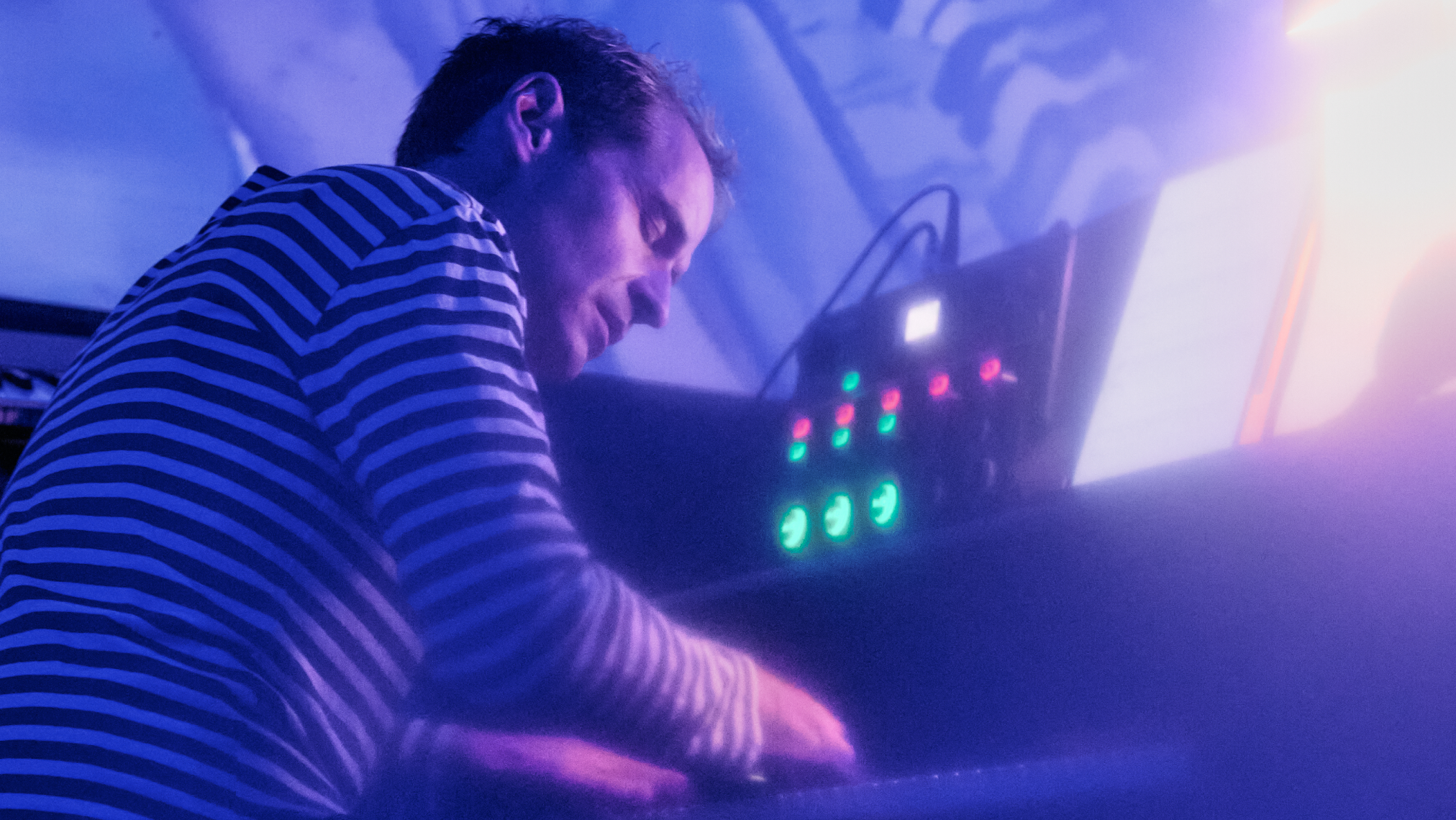
Finding a composer’s voice
‘At the start of any project, you just sit down and try to work out what that project is calling to you. There's got to be something in a project that makes you feel, “Oh, we could try this, or we could try that.”' Following this gut feeling is how Leonard-Morgan decides which projects he takes on. It seems that he is searching for a fundamental connection to the project that will help bolster his creativity, or work in tandem with the rich archive of sounds he has already compiled, just waiting to find their place.
While working on 2011’s Limitless, Leonard-Morgan had been working with No Doubt and producer Mark ‘Spike’ Stent on synth programming, using instruments like the Orchestrator and a Mellotron, when Stent suggested Leonard-Morgan create a pitch for Limitless. ‘I had these sounds, but I didn't know what a pitch was; Limitless was my first big film, and I just thought, “Oh, hey, here are some tracks”. And so, I had these sounds from Gwen Stefani’s then-new album, and they just worked for this theme.With 2012’s Dredd and with Alex Garland (Dredd’s writer and producer), every single sound had a place in that film. We didn't want it to be glossy, so there wasn't going to be an orchestra on it, and then we used a thing called PaulXStretch. I remember, [Garland] was working with Geoff Barrow from Portishead, who had mentioned PaulXStretch to him, which slowed down my track by 8,000% – all these things are great fun!’
“There's got to be something that calls to you right at the start. You hope that that's going to work, and even if it doesn't, it gives you an idea, a spark.“
‘It just really depends on what you're doing, but there's got to be something that calls to you right at the start, and you've got to go into film and TV, etc., with a thought process behind it,’ he continues. ‘You hope that that's going to work, and even if it doesn't, it gives you an idea, a spark. I did a film last year called Last Breath, and I had gone into the sea at Malibu and just sampled myself hitting some boats, and that turns into percussion.’
Whether it's a film, a video game, a TV series, or writing a ballet, Leonard-Morgon says he’s searching for a vibe, something that will allow him to experiment. He takes this ethos of experimentation to his music writing, too. Rather than reaching for what’s familiar, he tries to do things differently where possible and give his mind the space to make creative connections through different activities.
‘I think if you sit down at your usual instrument, it's always going to sound the same. I play the piano pretty well, but I also play the violins, I say, very badly. I play all the string instruments. I play a lot of wind instruments. But I think for me, if you sit down at an instrument, it's like muscle memory, whether you're playing samples or you're playing your real instruments.’
‘If it's a film, I watch it a few times, then just switch it off and go for a run, and it's all just floating around in my head the entire time as I'm walking along. Then gradually I’m coming up with nuggets, going, “Oh yeah, that might be quite good for that.” So when I sit down in the studio, I start playing along. I definitely find that if you sit down at an instrument, even if you're sitting down at a keyboard, you're going to root for the same sounds that you normally do. So I try not to do that as much as possible.’
The soundtrack for Pretty Lethal came after Leonard-Morgan had a burnout period. Looking to recharge, he took time off to explore personal music projects rather than writing for clients. ‘I'd done loads of soundtracks in the space of about three or four years. So I took a month off, I wrote an album for myself, just called Etudes for Piano & Cello, and then all these dancers started dancing to it. We premiered it at East West Studios, and had about 300 people come to see it. And then over the next year, all these dancers, the principal dancers of the San Francisco Ballet, the National Ballet of Canada, just started getting in touch, saying, “Hey, do you mind if we choreograph to your music?” I was like, “Go for it!” Then, when I was up at Skywalker Ranch, I got this call. He said, “Oh, look, I love your stuff, but also, have you ever written anything for dance?” So I was like, “Haha! Here's this stuff!” So it's weird, isn't it? Build it, and they'll come.’
For Leonard-Morgan, it doesn't matter what instrument you're writing for; coming up with original ideas that speak to your unique voice is the priority. ‘Don't try to be like someone else— again, the Seaboard is very good at helping you do that—but just try to do something. I took a month off, did my own album, dancers started dancing to it, and now here I am on this massive film, simply because I did my own thing’.
“Don’t try to be like someone else. Just keep having fun. Fun is the most important thing. You've got to enjoy what you're doing. Come up with your own sounds, and people will react to them. People react to authenticity. Be yourself.“
If Leonard-Morgan’s experience proves anything, it’s that excitement and curiosity about the many forms that music can take, and staying true to his vision are the driving forces behind his creativity. By embracing all possibilities of sound, whether intentional or discovered by accident, you shape a sound you can call your own. ‘Don’t try to be like someone else. Just keep having fun. Fun is the most important thing. You've got to enjoy what you're doing. I'll go back to that, “build it and they'll come” thing. Instead of thinking “oh, I'll be like Paul or oh, I'll be like Hans”, or whoever you're trying to imitate, don't, because by the time you catch up with whoever it is you're trying to be fashionable, they'll be out of fashion as well. Obviously, watch what's on and see what's current, but do your own thing. Come up with your own sounds, and people will react to them. People react to authenticity. Be yourself.’ After lending some of his own advice, he reflects on his journey to think of the words of advice that he would have loved to receive as a burgeoning composer — to stop worrying so much. ‘I was never really taught film music as such. So it was like, “Oh, I wonder if they'll like this. Does this suit their film?” I've really chilled out in the last four or five years and gone, “Right, do you know what? Instead of wondering what they want, give them what you want”.'
‘If at the end of three or four weeks, you can go, “That's fine. I can always play it safe if you want me to play safe, but let me do my thing first.” Then you'll find that by having this story and by having this vision for it, it makes it so fun that they don't know what they want, so stop trying to guess what they want, and instead just do your calling to it, go and do something interesting, and they'll reign you in. And the good collaborators, the good directors and producers will then say, “Hey, I love that bit. How about we take it up there?” And it's the best, most fun feeling when at the end of a soundtrack you've got no idea how you got there! But you've got to start somewhere, and you start by just doing your own thing. So don't try to guess what people want. Just follow your instincts.’
Discover more from Paul Leonard-Morgan on Instagram, YouTube, and his official website.
Suggested articles
Thrilling slash terrifying: Composing the Halloween theme on the Seaboard

Happy Birthday, Hans Zimmer: A deep dive into the sonic world of an era-defining composer
Juan Dussán: 5 things I'd do differently if I had to start over as a Media Composer
Rachel McFarlane: Making music in the space where storytelling and sound meet
How to create Hans Zimmer’s ‘Dune: Part Two’ score on ROLI Seaboard RISE 2 keyboard
Craft sweeping scores with Orchestral Ensembles
Join the ROLI community