Rachel McFarlane: Making music in the space where storytelling and sound meet
As part of our celebration of inspiring artists for Women’s History Month, we spoke to one of the most exciting new voices in film and video game scoring.
Rachel McFarlane is fast becoming a force to be reckoned with as an exciting young composer in the world of film, video games, and orchestral music. The Toronto-based composer combines orchestral textures with the limitless possibilities of electronic music in scores for film and video games. You’ve probably heard her work featured in titles from video game titans, Riot Games, or in projects with Red Bull and the Sphinx Organization.
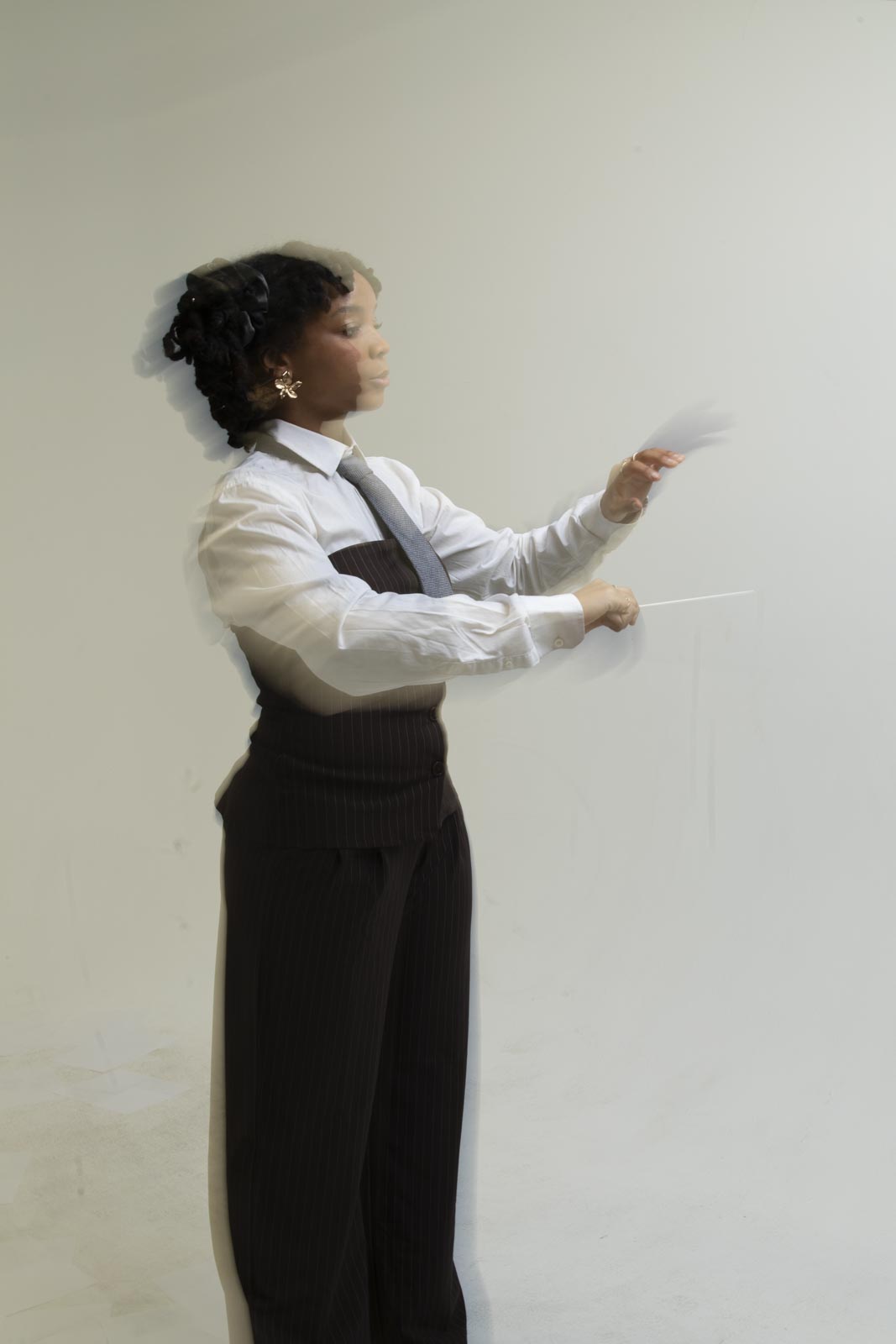
Rachel’s formative experiences with music began with learning the violin at age 12, with her first commission to write for an ensemble arriving when she was 16. ‘I was very classically trained, learning all the rules (counterpoint, harmony, “don’t do parallel fifths”), and I loved it, but I also remember feeling like my creativity had to fit inside these invisible lines.’
Like any curious and creative mind, the lines become an unbearable barrier that must be crossed. After some time, Rachel’s curious streak evolved into a journey that went from film scoring to video scoring, and eventually landed her a place at the revered Berklee College of Music, where she double majored in Games and Interactive Media Scoring and Film Scoring. ‘I just graduated as Valedictorian, and now I’m working at Riot Games while continuing projects with Red Bull and the Sphinx Organization.’
“I think my style matured when I stopped trying to “write correctly” and started trying to write honestly.“
Rachel describes her sound as the space where storytelling and sound meet. ‘Stylistically, I’ve evolved into this hybrid orchestral space,’ she explains. ‘I still love strings, but now I blend in synths, pitch bending, aleatoric textures, and even influences from hip hop and jazz. I think my style matured when I stopped trying to “write correctly” and started trying to write honestly.’
By focusing on honesty in one's music, an artist will inevitably begin to look introspectively for ways to develop their artistic voice. Despite her love for the violin, Rachel encountered moments where the instrument and the pieces she played didn’t always give her the freedom to express all her creative ideas. It was only when she discovered the almost creatively limitless world of film and video games that things began to change.
‘Honestly, it was freedom. On the violin, I loved performing, but while in high school, I realized I would always be interpreting someone else’s story. In film and games, I get to help build the world from scratch. There are almost no creative limits. You can combine orchestra with a distorted synth and bend notes in ways classical training would frown at.
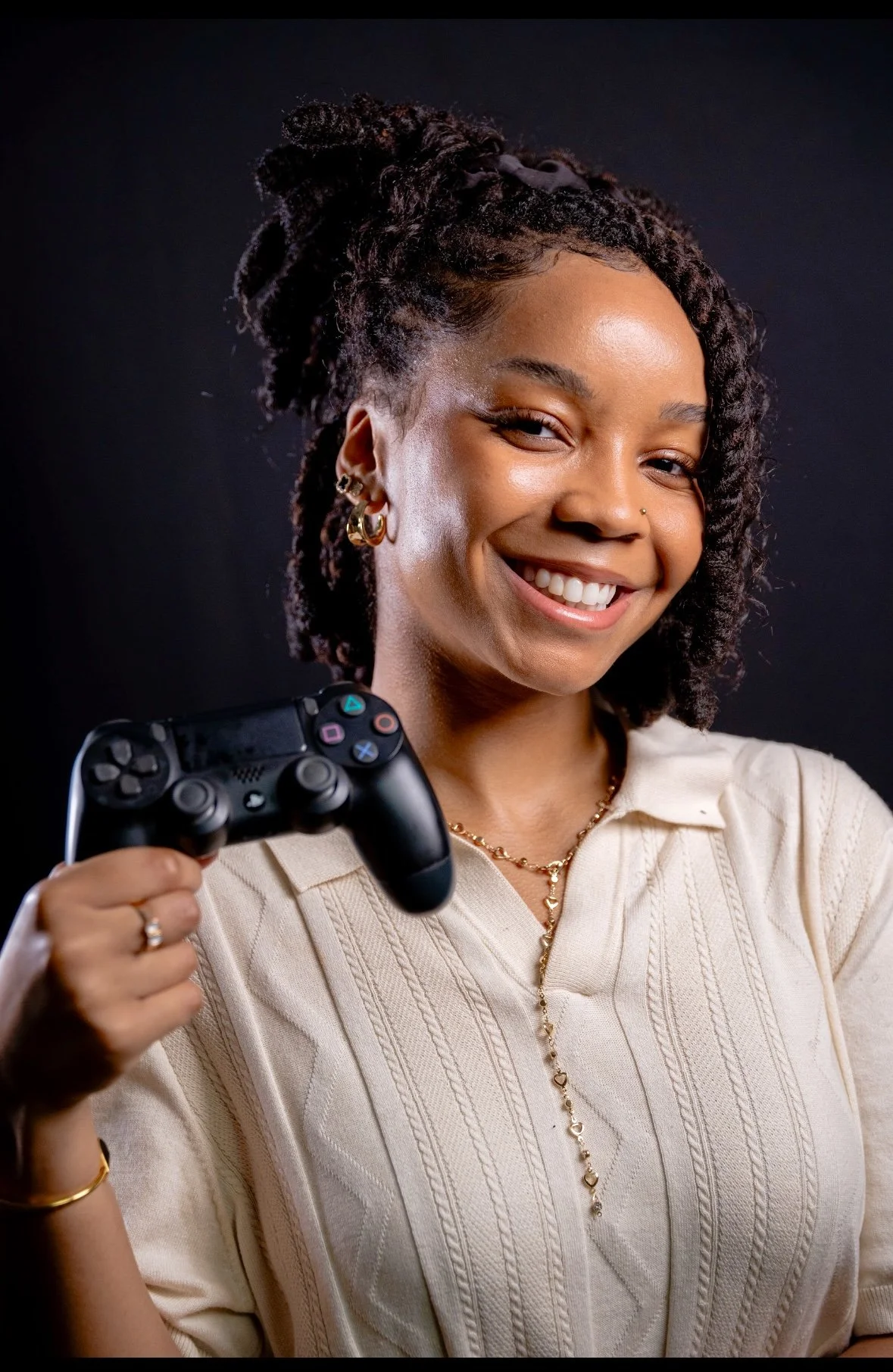
Games especially fascinated me because the music was able to react and evolve. It listens back. As someone who considers themselves a gamer, that feeling of being immersed in games comes mostly from the music that’s holding you inside that world. That interactive aspect felt like the future to me’.
“As someone who considers themselves a gamer, that feeling of being immersed in games comes mostly from the music that’s holding you inside that world. That interactive aspect felt like the future to me.“
Talent, consistency, and discipline
‘There was a moment at Berklee when I realized talent wasn’t enough,’ Rachel says, recalling a defining moment of her career thus far. ‘I had entered as someone who used to be “one of the best” at my old school, and then suddenly I felt like the worst in the room. It was very humbling.’ However, instead of quitting, Rachel turned a humbling moment into an opportunity for growth. ‘I studied the people I admired. I built discipline. Early mornings, less scrolling, more writing. Getting out of my comfort zone to network more. That shift changed everything and eventually led to being the most awarded student in the screen scoring major and graduating as Valedictorian. More importantly, it taught me that consistency beats ego every time.’
And that consistency and discipline have not been in vain. Through all of Rachel’s efforts, she is set to become the first Black woman to graduate from Berklee College of Music with a Bachelor of Music in both Games and Interactive Media Scoring and Film Scoring. Becoming a graduate of Berklee is a remarkable achievement on its own, but to be the first to achieve something carries its own weight, raising questions of how or why it hasn’t yet been achieved. We asked Rachel how she felt about the title and if it reflected the landscape of inclusivity and intersectionality in film and video game scoring.
‘It’s both an honour and a responsibility. When I learned I was the first, it didn’t feel like a trophy, but more like data,’ she explains. ‘It showed me that this industry’s landscape still has gaps. I felt a ton of pressure at the beginning. When you’re the first, you’re aware you’re being watched. That can feel heavy. I used to feel like I was representing an entire community with every interaction. I didn’t want to “mess it up.” But over time, I realized representation isn’t about perfection. It’s about visibility. If my presence makes the next person’s path feel slightly less lonely, that matters.’
“When you give without calculating the return, you create space for authenticity. ... Community accelerates growth. Giving your time, your knowledge, and your presence creates ecosystems where everyone rises.“
When asked about the theme for this year’s International Women’s Day — “Give to Gain”, Rachel explains that she interprets it as trust. ‘When you give without calculating the return, you create space for authenticity. I’ve learned that sharing what I know, even when I felt “too young” to teach, deepened my own understanding. Every time I share knowledge online, mentor someone, or collaborate openly, something unexpected comes back.
My career moved quickly after graduating, but none of it happened in isolation. Community accelerates growth. Giving your time, your knowledge, and your presence creates ecosystems where everyone rises.’
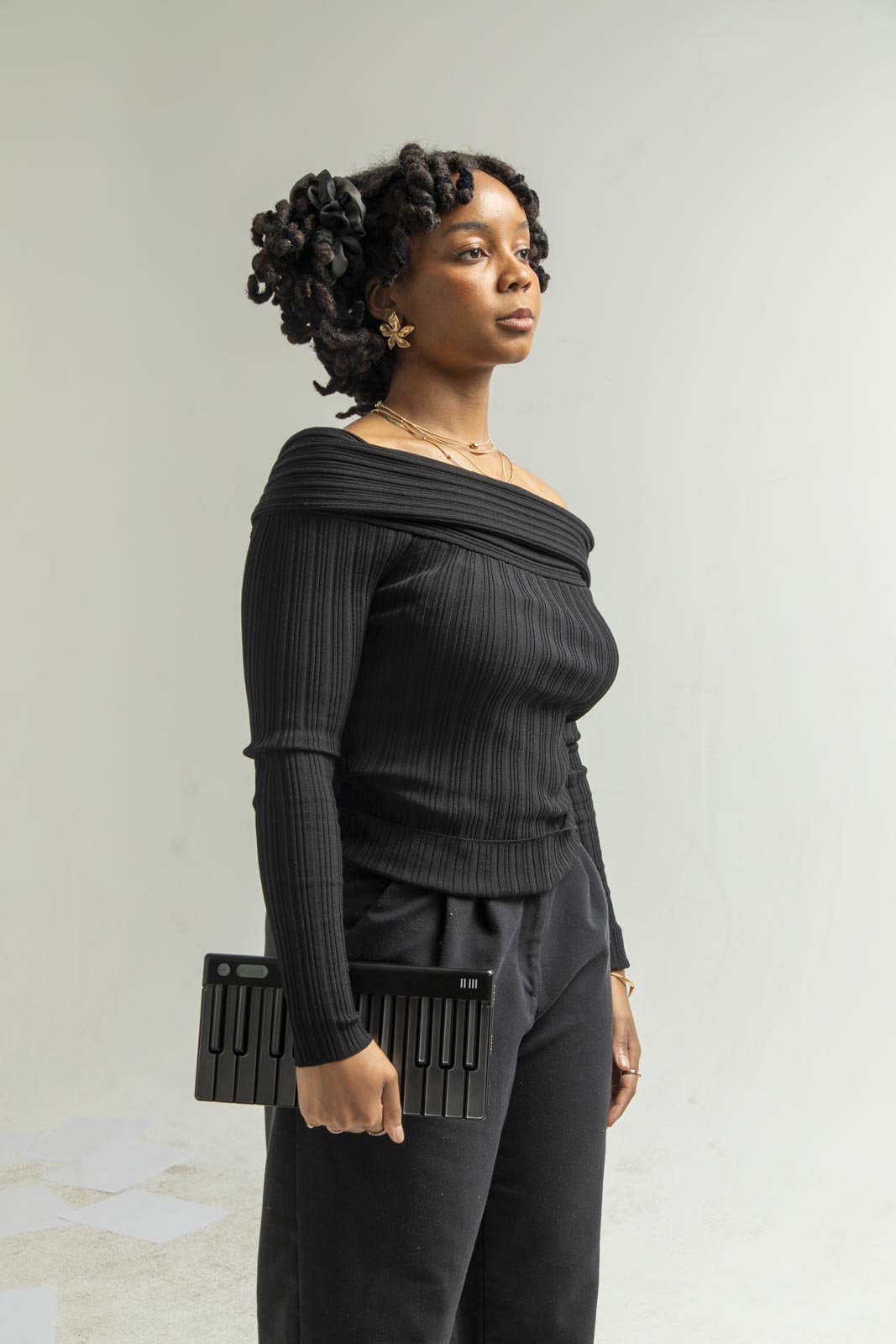
For anyone who has followed Rachel’s musical pursuits, they may have spotted her conjuring up immersive fantasy soundscapes with Piano M and Equator2, or tearing through a searing solo with Seaboard 2. Where do those compositions come from?
‘The soundscapes often begin with listening. I’ll sit with a single tone and explore how much emotion can live inside it. The Seaboard feels very physical to me because the pitch bends remind me of violin vibrato, but in a new dimension.
With Piano M and Equator2, I love starting with texture. I’ll hold a chord and just explore how it breathes. Sometimes a cue will start as a single evolving sound, and then I build orchestration around it later. Those ROLI soundscapes usually begin as experiments that turn into emotional anchors.’

‘ROLI gear feels expressive in a way that traditional MIDI sometimes doesn’t. It allows for micro-movements, which is huge for me because my background is in strings. It reduces the distance between idea and feeling. When I press into a note, and it responds dynamically, it feels closer to how emotion actually moves. Sometimes I start with a clear concept. Other times, I just explore until something feels honest. It helps me stay connected to touch, which is important in a digital world.’
Aside from her few ROLI instruments, Rachel prioritises simplicity and intentionality with the instruments she uses to create her music. ‘My setup is simple but intentional, and overall, it’s able to move with me when I travel. I need a space that feels calm enough to experiment. A keyboard that responds to touch, good headphones or monitors, and room to move between orchestral and electronic worlds.’ Rachel also makes sure to note that her creative power doesn’t just come from the gear itself, but it can be the key to unlocking greater powers that we may already have. ‘I don’t think gear defines creativity, but the right tools remove friction. When friction is gone, intuition flows faster.’
“The Seaboard feels very physical to me because the pitch bends remind me of violin vibrato, but in a new dimension.“
For many young and aspiring artists, it can be easy to fall into the trap of thinking that the latest and greatest in production gear can solve all your creative problems. Rachel seems to have bypassed all that confusion, settling instead for fundamental changes to the process of creating music and improving your craft that works, whether you’re using MPE-enabled gear or not, and wants to share that advice with others on their own musical journeys. It’s the ethos of consistent effort, staying focused, and having a healthy amount of curiosity to guide you.
‘I would say build discipline early. Talent is great, but consistency wins. Write even when you don’t feel inspired. Post your content and send that email. Learn how to collaborate well. I would also say stay curious and protect your love for music. Curiosity will carry you further than comparison ever will. Learn the rules, but don’t be afraid to question them.’ She also mentions a key pieces of advice she wish she had received at the start of her journey: ‘You don’t need everyone to like you. Focus on the rooms where your voice fits naturally.’
With so many incredible achievements already under her belt, Rachel shows no signs of slowing down, hinting at her music reaching far beyond the video game screens.
‘This year is kind of wild, in the best way. I’m working at Riot Games, continuing projects with Red Bull, and my orchestral work with the Sphinx Organization will be touring across the U.S. soon. I just graduated, so it feels surreal to already be stepping into projects at this scale. I want to keep building music that feels human and continue to collaborate with people, whether it’s in a game, a documentary, or on a concert stage across the world.’
Discover more from Rachel McFarlane on Instagram and her official website.
Suggested articles
"Music is my strongest form of expression" — Shan Jiang on art without limits
“There is no failure in creativity”—LNA Does Audio Stuff on fearless music-making
Celia Tewey Creating without the pressure of perfection
Levelling the playing field with MALKA and Hen Hoose

Making your music happen with MISSTIQ

An ode to the greatest women pianists of all time

International Women's Day Pioneering forces in music technology
International Women’s Day 2025: Pianists you need to know
Join the ROLI community