January is the biggest month for new music learners. Here’s why so many quit
By focusing on smaller steps, realistic progress, and self-belief, learning an instrument can become something sustainable rather than overwhelming.
Every January, millions of people start the year with the same intention: to learn something new. Whether it is picking up a hobby or developing a new career skill, 15% of Americans resolve to “learn something new” at the start of the year.¹
The scale and accessibility of online education have made learning more achievable than ever. In the UK, research shows that online videos are the preferred learning method for adults aged 16 to 54, with a particularly strong interest in practical and creative skills.² This points to a widespread desire to create, improve, and explore new hobbies.
But while the turn of a new year can feel like a blank sheet of music, staying in rhythm is not always easy. Across both the US and the UK, evidence consistently shows that New Year’s resolutions tend to unravel quickly.
A 2025 study found that around 40% of Americans had abandoned their resolutions by the end of January,³ while UK data suggests that one in four people admit to failing to keep any of their New Year’s resolutions at all.⁴
There is even a name for this moment. “Quitter’s Day”, usually falling in mid-January, marks the point when the initial motivation behind New Year’s resolutions tends to drop off.
Learning an instrument is no exception. Many people start with enthusiasm, only to lose momentum when progress feels slower than expected. The question is why that happens, and what actually helps people keep going long after the first few notes.
Why is learning an instrument so hard?
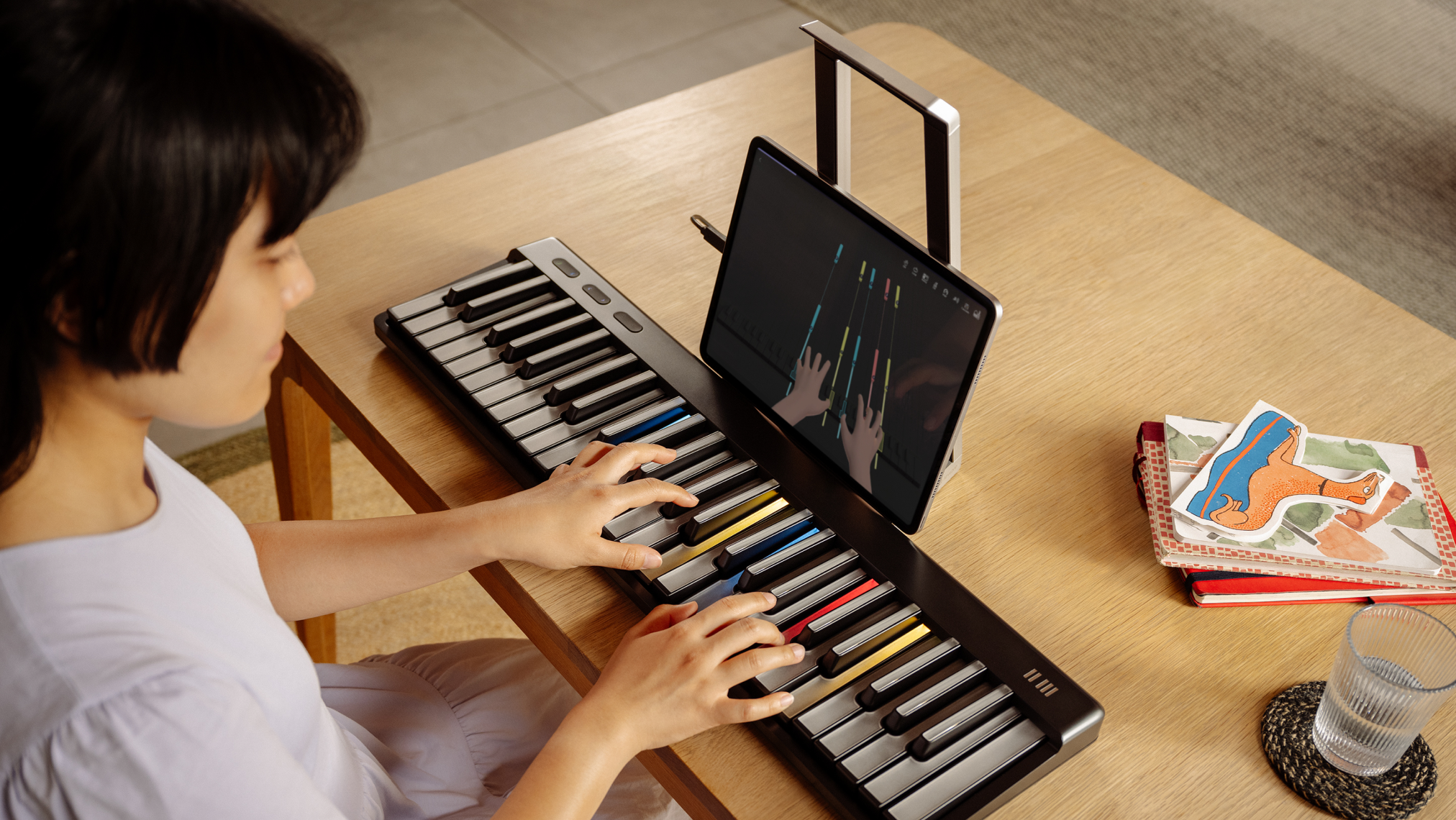
Learning to play an instrument can feel uniquely exposing. Unlike many hobbies, music asks you to be heard before you feel ready, and that vulnerability can be uncomfortable. For those just starting out and learning piano, the early stages are rarely polished. Notes can feel tentative, coordination awkward, and progress hard to measure. But that uncertainty is not a sign that something is going wrong. It is simply part of learning something expressive and personal.
Many people beginning their journey into learning piano or learning keyboard tell us that the hardest part is not the technical challenge, but the internal dialogue that accompanies it. A missed note can quickly turn into self-criticism, and even a short break in practice can feel like losing momentum altogether. But these moments are not failures. They are part of building familiarity, confidence, and trust in yourself as a learner.
Sophie Solomon, music expert at ROLI, explains, the issue is often the pressure adults place on themselves to get things right from the very beginning: “We tend to approach music as though it is a performance from day one, rather than an exploration. That pressure shuts people down. When every note feels judged, even by yourself, it becomes much harder to stay curious or playful."
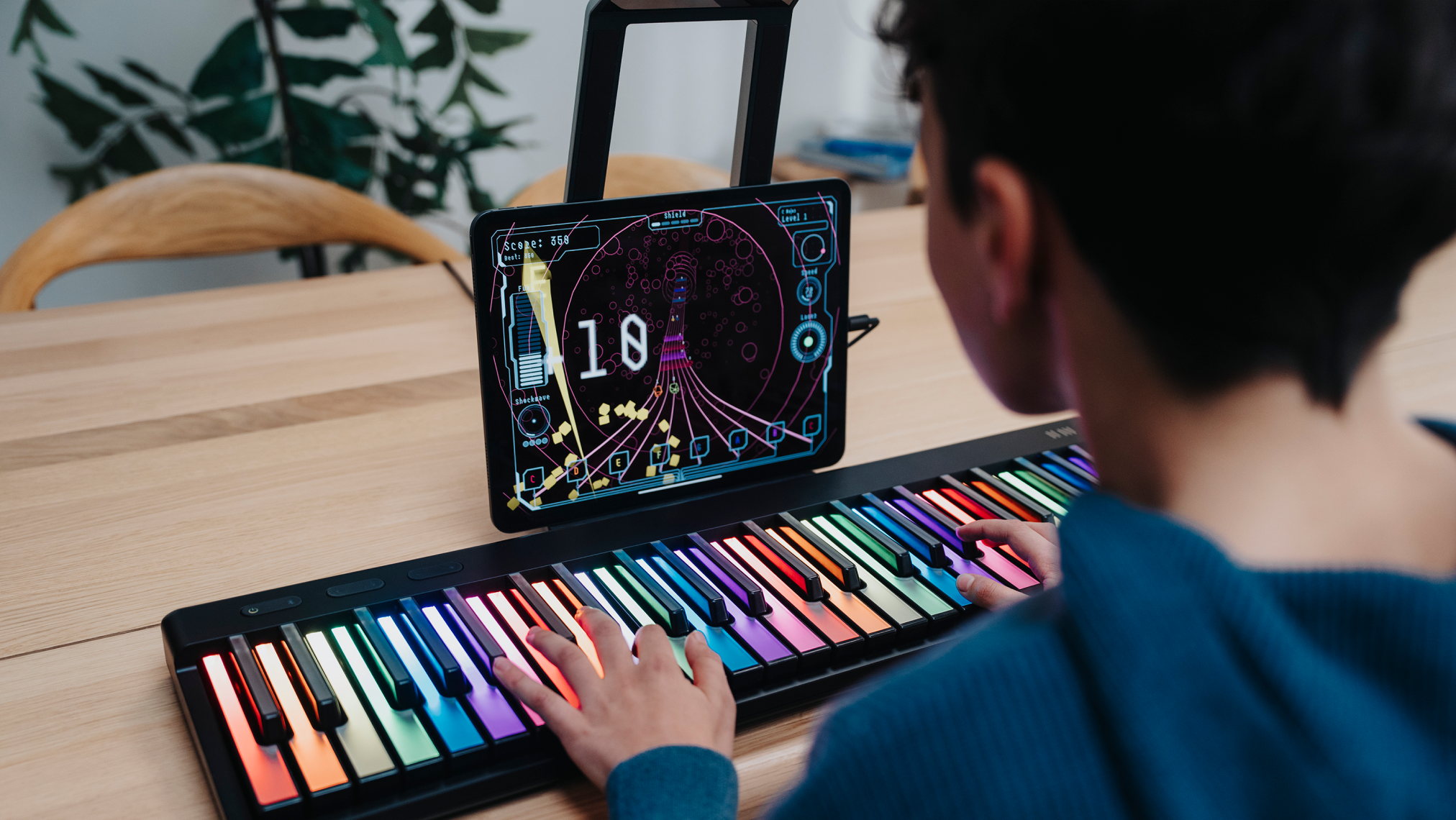
Sophie believes that creating a sense of safety and enjoyment is essential, particularly when people are learning piano at home using new tools and technology.
“Music is one of the few spaces where adults forget how to play. Children experiment freely, but as adults we worry about doing things ‘properly’. When learners give themselves permission to explore, whether that is through a smart piano keyboard or a portable keyboard they can pick up and put down easily, the experience becomes far more inviting.”
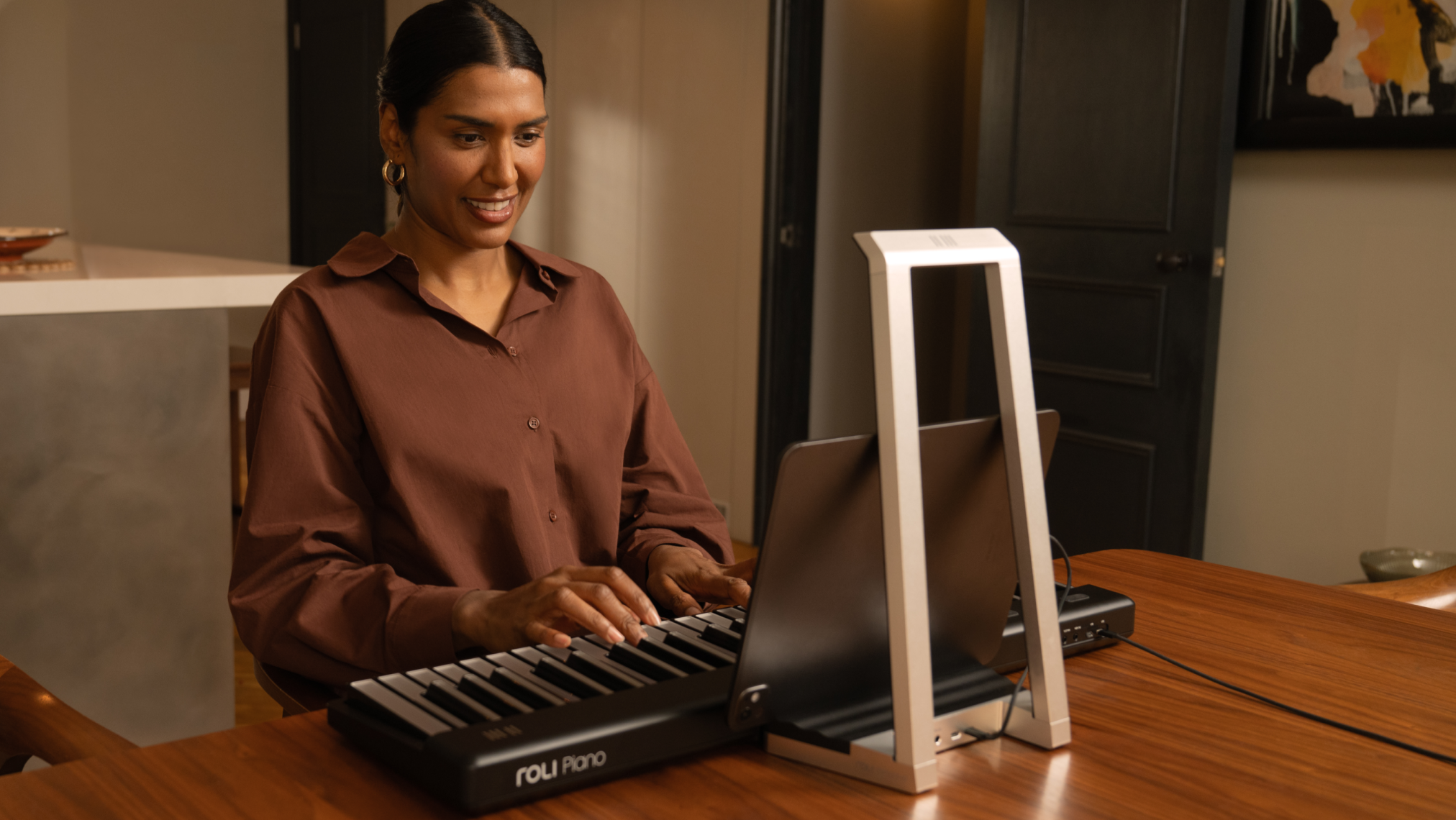
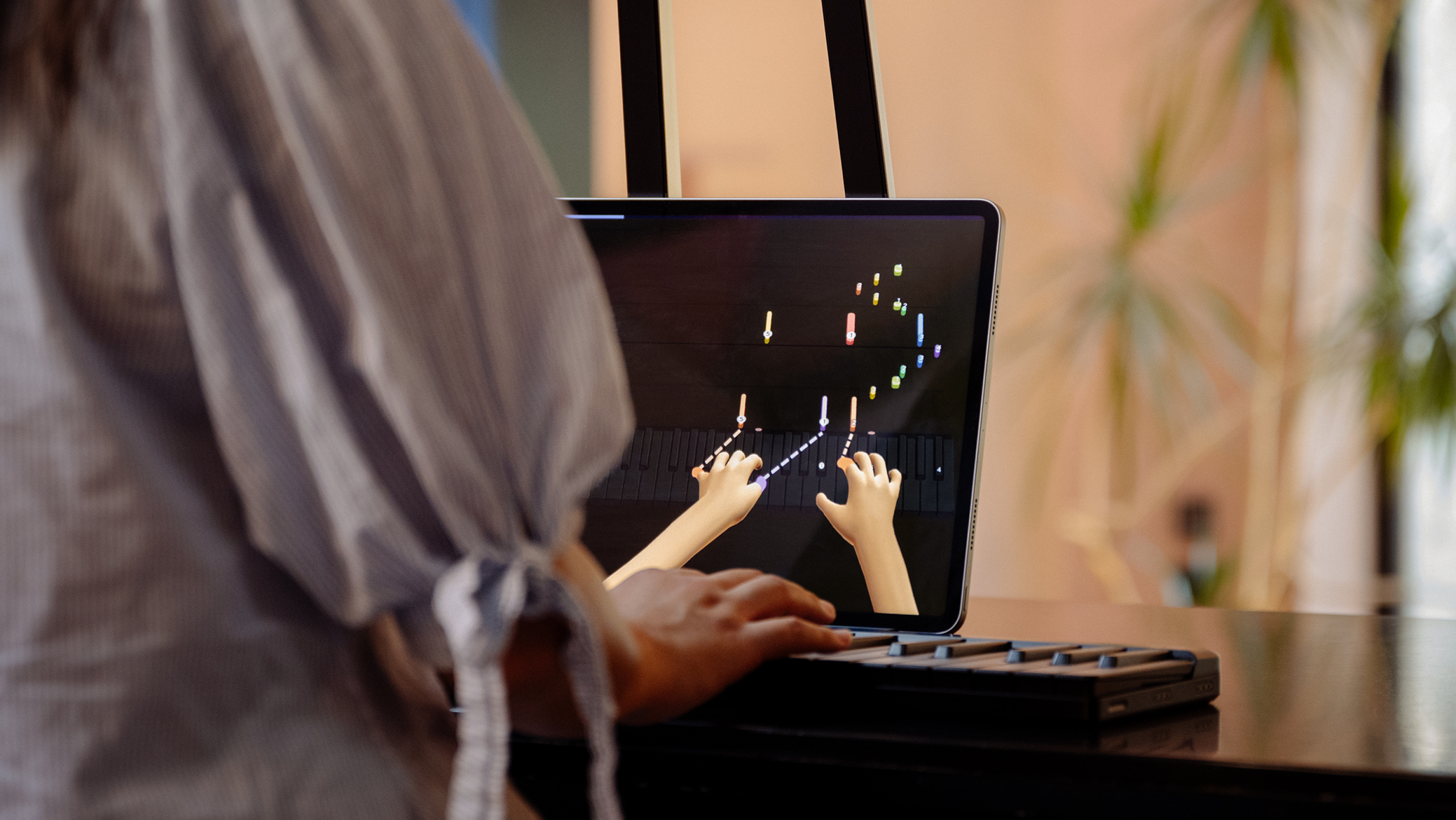
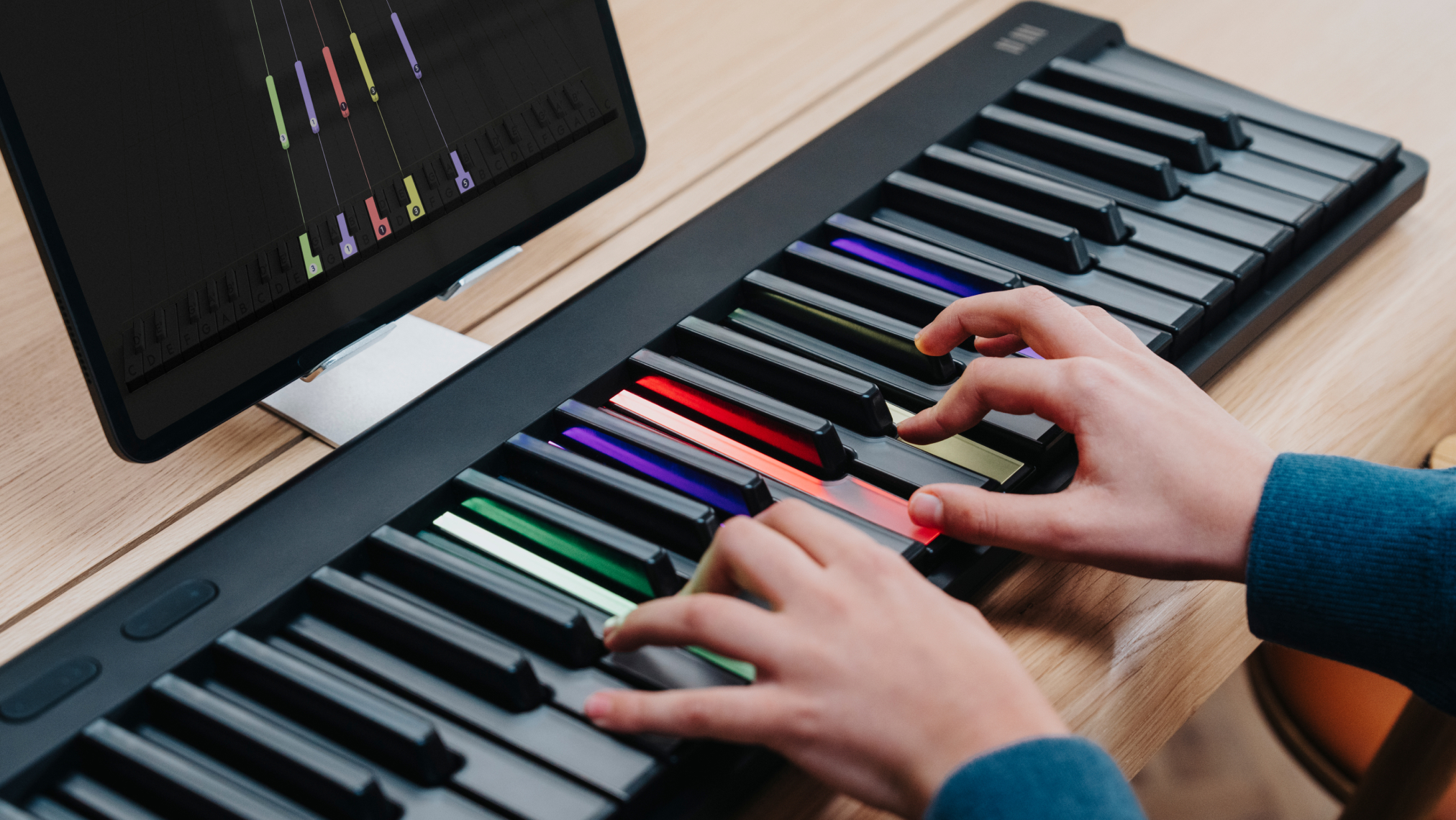
Technology can play a helpful role in lowering those barriers. Using a smart piano or portable piano designed to respond intuitively to touch can help learners focus less on judgment and more on expression. Paired with a piano learning app or learning piano software, practice becomes less about repetition for repetition’s sake, and more about discovery and flow.
Rather than chasing instant results, Sophie encourages learners to pay attention to what is quietly developing beneath the surface.
“Confidence does not come from sounding good straight away. It comes from familiarity. From recognising patterns, feeling at ease with the instrument, and trusting your instincts. Those changes are subtle, but they are where real progress begins.”
The truth is, humans are inherently musical. Rhythm and sound are part of how we communicate long before we learn rules or notation. There is no “wrong” way to begin learning piano. There is only the courage to start, and the patience to let something personal emerge in its own time.
The science behind quitting new habits
We spoke to 3 experts on why we give up on new habits and hobbies, and how we can overcome them.
From a psychological perspective, the early stages of learning place significant demands on the brain. Therapist Brian Lutz explains that when someone begins learning unfamiliar material, “the prefrontal cortex activates to help you make intelligent decisions”. This means learning requires conscious effort, rather than automatic behaviour.
Emotion also plays a major role in whether habits stick. Lutz notes that “another big reason habits fall apart is emotion”, particularly when people feel “frustrated, defeated or otherwise overwhelmed by your feelings”. He often sees this happen when “a client misses one day at the gym and concludes, ‘Okay, I’ve totally failed,’ and quits going altogether”.
This response is driven by the amygdala, which Lutz describes as “the part of the brain responsible for this reaction”. When motivation dips and dopamine levels drop, the brain struggles to function efficiently, making it even harder to push through discomfort.
Key takeaway
If learning feels harder after the first few weeks, it does not mean you lack discipline. It means your brain is adjusting to change.
The emotional traps new musicians fall into
Clinical psychologist, Dr Daniel Glazer, explains that motivation alone rarely sustains a habit. People often start “feeling super-enthusiastic about a new habit and its benefits”, but “after the motivation diminishes, the discipline also does, unfortunately”.
Habits can fall apart quickly because “the brain resists change; it seeks familiarity, not novelty”. Learners may not even notice they have stopped until “the habit is truly gone”.
Learning an instrument is especially vulnerable to this drop-off. While it can be exciting at first, “the progress is oftentimes slow and the results can only be seen later down the line”.
Quitting is rarely about one thing. Instead, “we feel frustrated, we feel bored, we feel like everything is repetitive”, until eventually “we just don't want to do it anymore”. Perfectionism can make this worse, because “usually new habits require practice and it will take some time until they are perfect”.
Key takeaway
Many learners quit not because they lose interest, but because frustration, slow progress, and perfectionism quietly drain motivation before a habit has time to settle.
Why belief matters more than motivation
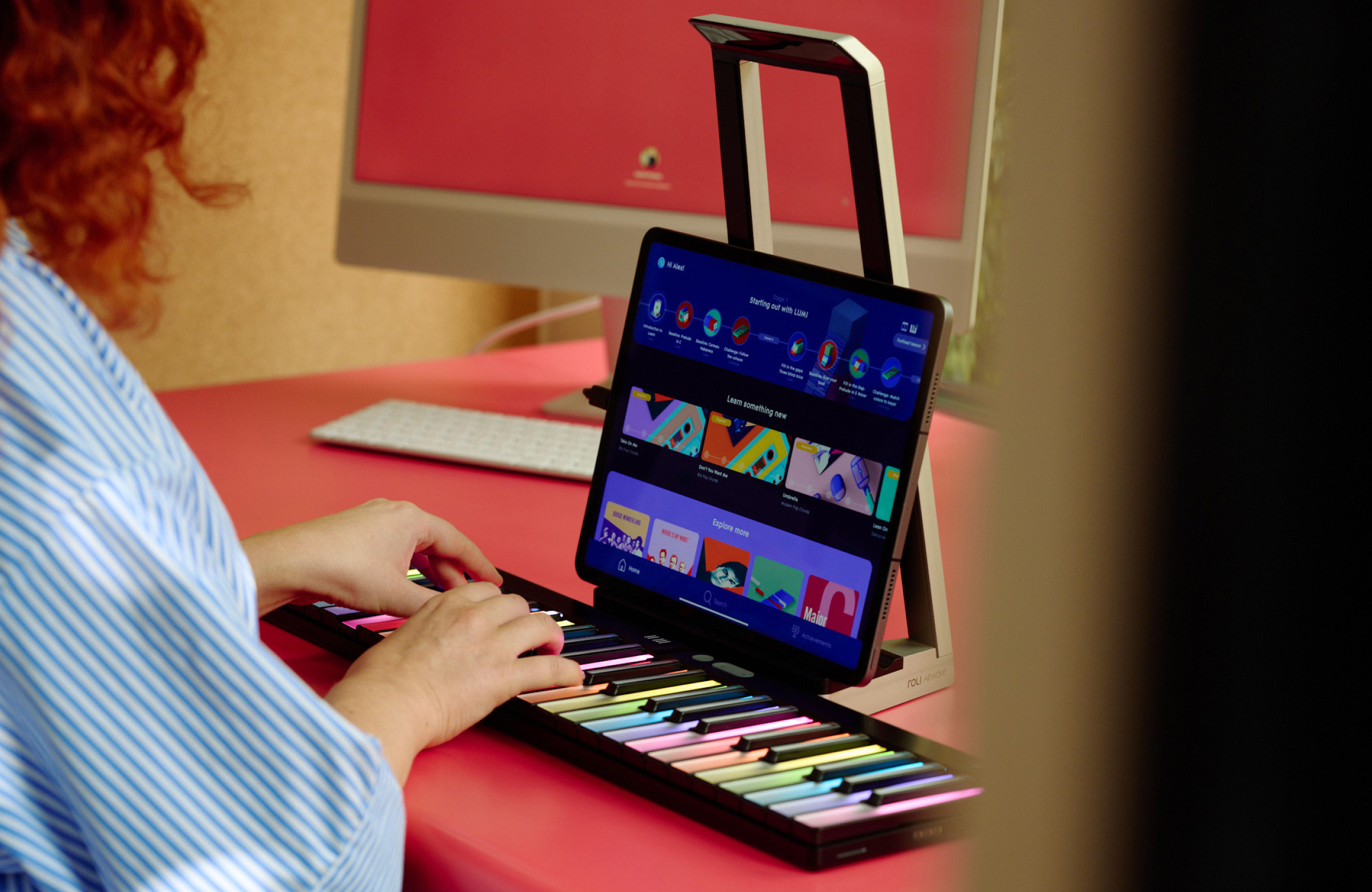
Confidence is a crucial part of habit formation. Dr Glazer explains that sustained effort only works when people believe their actions will pay off. When something requires discipline over time, “we can only do it if we believe that our results will be fruitful”.
People need “to believe in themselves, to have confidence and to have hopes that what they are trying to do will be worthwhile and become a reality”. Without that belief, “we cannot keep up efforts, especially if they are hard and do not come naturally to us”.
This is why learners with previous long-term achievements often find it easier to persist. They trust the process, even when progress feels slow.
Key takeaway
Long-term progress depends less on initial enthusiasm and more on believing that effort will eventually pay off, especially when results are slow or invisible in the early stages.
What new music learners often get wrong in the first few weeks
According to Sophie Solomon, one of the biggest mistakes beginners make is expecting progress to feel linear.
“Many learners assume that enthusiasm will carry them through, but early practice demands coordination, focus, and patience all at once. When improvement is not immediately obvious, it is easy to assume something has gone wrong.”
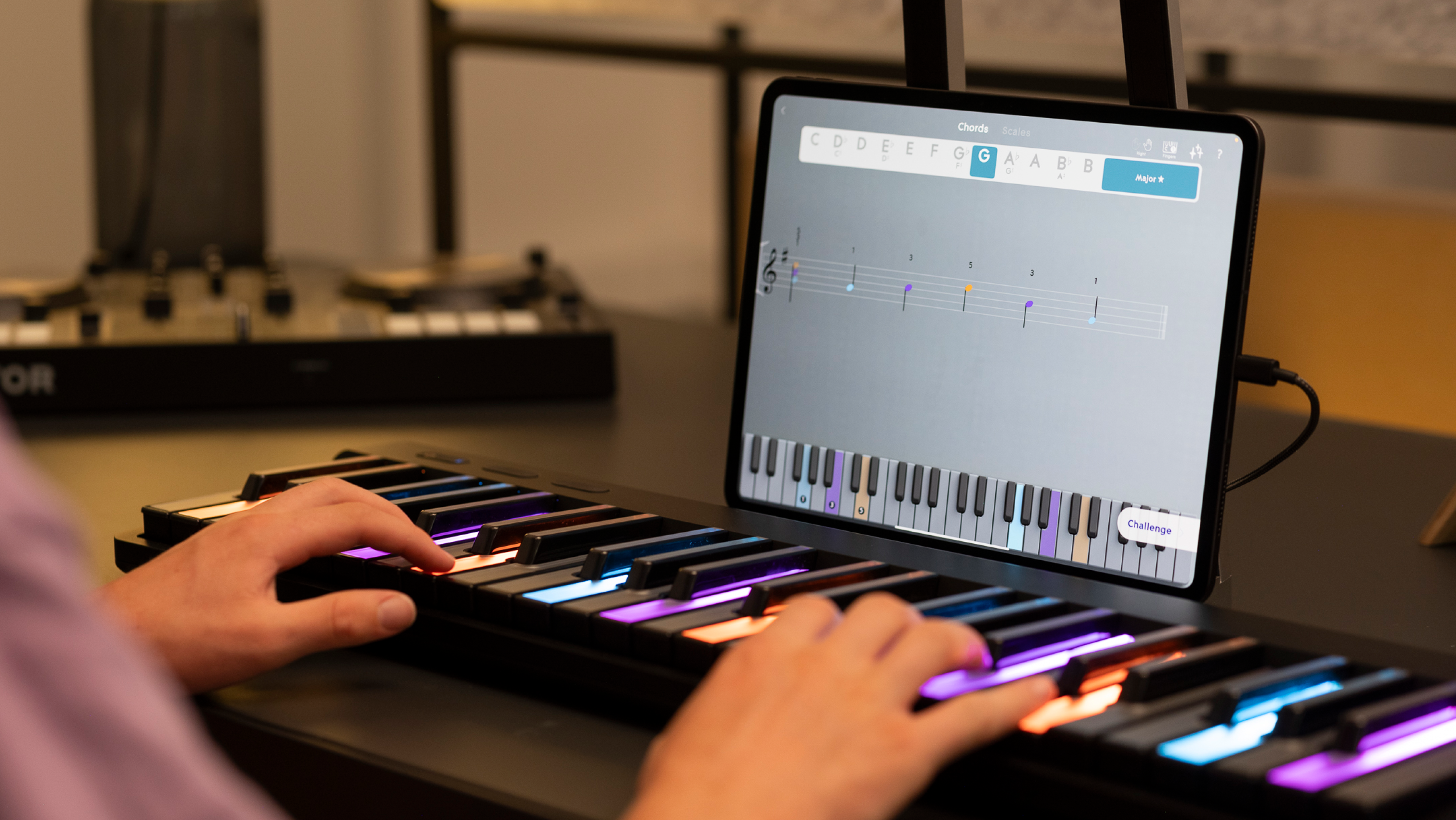
Sophie also sees beginners practising too much, too soon. “Long sessions driven by January motivation can be hard to sustain once everyday routines return. Short, consistent practice is far more effective for building confidence and maintaining momentum.”
Our data shows that while January sees the highest number of people starting to learn, engagement drops across the subsequent months of the year, as learners struggle to turn motivation into a sustainable routine5. Those who stick with regular, manageable sessions are far more likely to continue beyond the first few weeks.
Crucially, Sophie encourages learners to rethink what success looks like early on. “Progress is not always dramatic or obvious, but small gains in familiarity, comfort and confidence are signs that learning is happening.”
What actually helps people stick with learning music
Justin Brown, founder of The Vessel, explains that resistance is a natural part of change. “Humans are designed to seek familiarity, they are designed to seek comfort,” which means “any new habit that contradicts us just a little bit is in danger and needs to be observed and managed for a little while until it becomes like our second nature”.
Self-image plays a huge role. If “we have a good self-image about ourselves that we can do things, even hard things, and be successful at them, we are more likely to take on any new habit”. People who persist are often those who already know “they can tackle a certain task and finish it”.
Timing and simplicity also matter. Brown advises learners to “find the simplest way to do what you need to do” and to practise when energy and patience are highest. For many people, that means earlier in the day, when “our brain is fresh, it's rested, and it has more discipline in its storage”.
The ‘Anti-Quit Framework’
We spoke to the experts to create the ‘Anti-Quit Framework’, which is a set of principles that consistently help new music learners stay on track:
Lower the barrier: Five minutes of practice is enough to keep the habit alive
Protect consistency: Missing a day does not equal failure
Track small wins: Visible progress boosts motivation
Reset expectations: Early practice will sound imperfect and that is normal
Choose the right moment: Practise when energy and patience are highest
If you have already quit, this is your reset point
National Quitters Day is not a deadline. It is simply a moment when many people realise their approach needs adjusting.
The spike in January learners shows that the desire to learn music is strong. Quitting does not mean you lack talent or commitment. In most cases, it means expectations were too high, and the process was too rigid.
By focusing on smaller steps, realistic progress, and self-belief, learning an instrument can become something sustainable rather than overwhelming.
Discover a more playful way to learn the piano with ROLI Piano.
Sources
https://today.yougov.com/society/articles/53789-americans-new-years-resolutions-2026-poll
https://www.ciphr.com/infographics/virtual-learning-statistics
https://useorigin.com/resources/blog/the-new-year-called-it-wants-its-resolutions-back
https://yougov.co.uk/society/articles/53756-what-new-years-resolutions-are-britons-making-for-2026
ROLI in-app data, period between Jan 2025 - December 2025
Suggested articles
Why It Matters: From Quitter to Creator — How tech is saving piano learners
Thrown in the towel on piano learning already? Beat Quitter’s Day blues with the ROLI Piano System
10 easy piano songs for beginners
How long will it take to learn piano?
Join the ROLI community