Learn to play piano like Mozart
In light of the recent Sky series Amadeus, and on the occasion of his 270th birthday, we take a look at the life and work of a classical music icon.
We’re having something of a Mozart month here at ROLI: many of us have recently finished binge-watching Sky’s gripping new drama Amadeus, we’ve been working our way through his best-loved pieces in the ROLI Learn app, and today — January 27th — would have been the man himself’s 270th birthday.
To celebrate, we thought we’d take a look back at the true story of Wolfgang Amadeus Mozart’s life, his musical legacy, and some of his most popular pieces that are available to learn in the app. Read on to the end for those.
Amadeus
Let’s start with the fiction. But be warned — there may be (historical) spoilers ahead.
2025’s Amadeus, the British limited series, depicts Mozart, played by Will Sharpe, facing off against Paul Bettany’s Antonio Salieri as told in a series of flashbacks. Over five episodes, we see Mozart as a young adult arriving in Vienna, seeking both creative freedom and gainful employment. From here, the show charts his subsequent rise to stardom, fall from grace, and eventual death.
The show is loosely based on the 1984 movie Amadeus, which is in turn based on the 1979 play Amadeus. This was itself inspired by a 1830 play (not called Amadeus, sadly). The 2025 series is packed with drama, if not historical accuracy, and was well-received by critics for its fast pacing and fantastic acting. If you’re in it for the music, however, perhaps start with the 1984 movie in which Mozart’s music itself has been likened to a “third character” after Mozart and Salieri.

The real Mozart
The fictional retellings of Mozart’s story mentioned above all, understandably, dial up the drama — particularly the rivalry with Salieri, whom, according to most scholars, remained on friendly terms with Mozart throughout the latter’s short life. But that’s not to say that Mozart had it easy.
Born on this day in 1756 in Salzburg, Johannes Chrysostomus Wolfgangus Theophilus was the youngest of Leopold and Anna Maria Mozart’s seven children, though only “Wolfgang” and his sister, Maria Anna, survived past infancy. As a young boy, he first took an interest in music while watching his musician father teach his older sister — herself a child prodigy — to play the harpsichord.
Recognizing Wolfgang’s talent, Leopold encouraged him to play, and the boy began to compose his first pieces as early as five years old. The family went on to tour around Europe, with the two prodigious children performing for royalty in Munich, Vienna, Paris, London, and The Hague. The young Mozart also met several famous composers during this time, including Johann Christian Bach (the son of Johann Sebastian Bach).
In his teens, Mozart studied at the prestigious Accademia Filarmonica in Bologna before returning to Salzburg and taking up a job as an (underpaid, by his reckoning) court musician. Feeling stifled by both his financial situation and lack of artistic freedom, Mozart set out across Europe once again in search of better opportunities, but eventually returned home empty-handed.
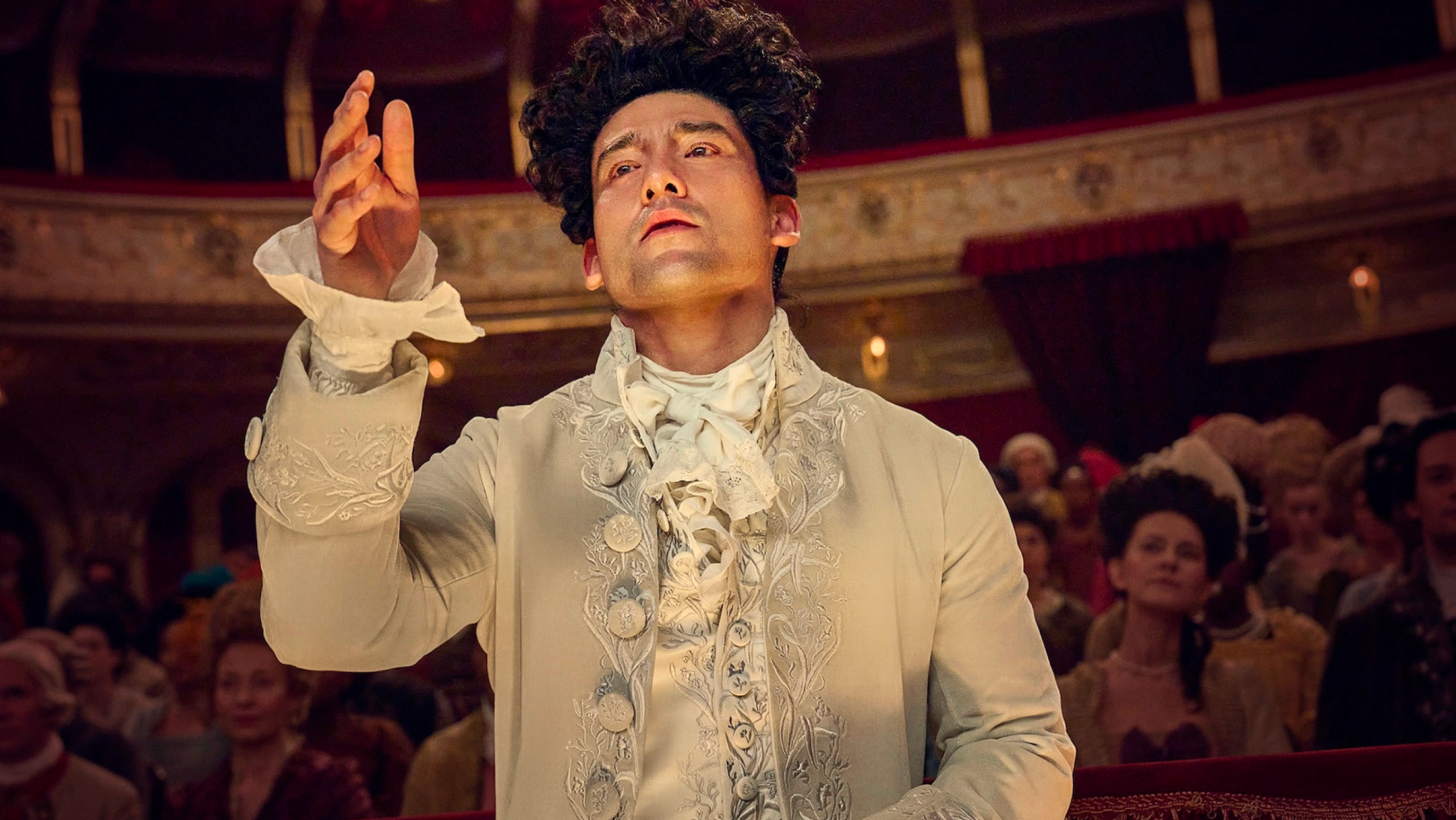
In 1781, Mozart was summoned to Vienna to work as a musical assistant to the Archbishop of Salzburg, Hieronymus von Colloredo. It’s here that the events depicted, or perhaps sensationalized, in the plays, movie, and TV show played out.
Mozart fell ill while working in Prague and died aged 35, most probably of natural causes, despite persistent rumors to the contrary. His funeral is said to have been sparsely attended, but memorial concerts took place across Europe shortly thereafter, signalling the beginning of an enduring legacy.
Mozart’s popularity as a composer never really faded, but for a time — up until the mid-20th century — he was widely considered to have been surpassed by Beethoven, a younger composer who was heavily influenced by the former’s work. In fact, Beethoven is said to have travelled to Vienna as a young man, intent on studying under Mozart. Unfortunately, no reliable records exist to tell us if the two ever met.
Renewed interest in the later 20th century revitalized Mozart’s image, from “child prodigy” to a composer who is today revered as one of, if not the greatest and most influential composers of all time. Alongside serious study of his work, popular perceptions of his exuberant, child-like nature have fuelled a resurgent fascination with his personal life — a fascination fans of the recent series will no doubt understand.
Learn to play piano like Mozart
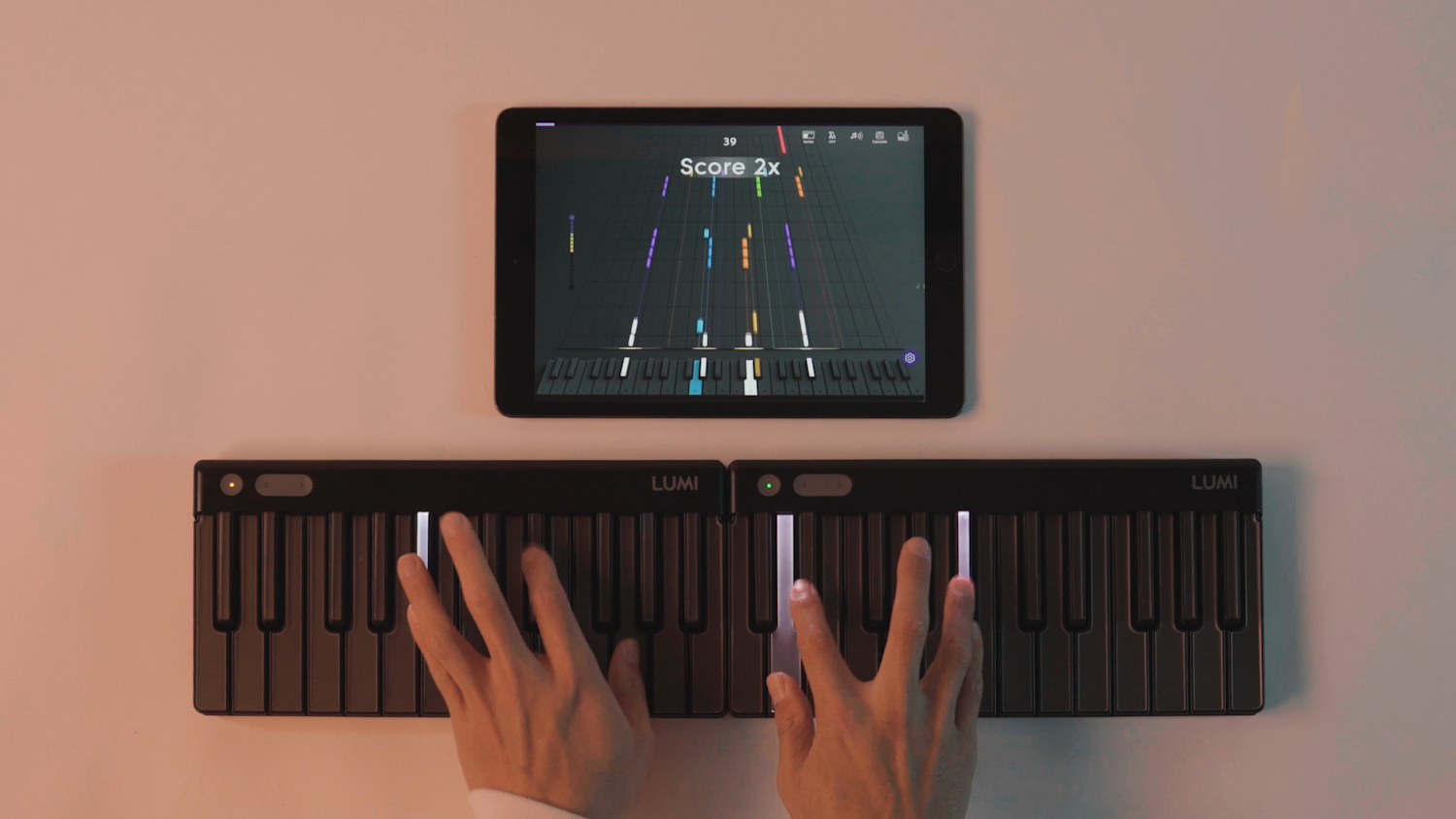
Ready to become a modern-day Mozart? ROLI Piano System teaches you to play with glowing keys, video game–style cascades of notes, and an ever-growing library of classical and contemporary music. You can work your way up to traditional notation, brush up on music theory with interactive video lessons, and even ask your AI-powered Piano Assistant for help and advice whenever you like.
A subscription to the ROLI Learn app gives you access to 14 of Mozart’s most popular pieces — check out some of them in the musical medley above and read on for a selection of our favourites.
Turkish March (Rondo Alla Turca)
If you’re not a classical-music buff, the fact that this is “only” the third movement of Mozart’s Piano Sonata No. 11 in A Major (K. 331) may suggest it’s a minor work. Nothing could be further from the truth. Written around 1783, this imitation of a Turkish-style military march isn’t only one of Mozart’s most recognizable melodies, but one of the most recognizable melodies full stop.
The energetic, percussive nature of this piece makes for a great finger workout and a tricky challenge for any enthusiastic beginner. Playing it is one thing; playing it well (as demonstrated by Lang Lang above) signifies a serious accomplishment.
Eine Kleine Nachtmusik
There are four movements to this 1787 serenade, and they’re all available to learn in the app. The opening allegro is one you’ll certainly recognize — it’s indisputably one of the most famous moments in classical music. It’s likely Mozart originally wrote this piece for a string quartet or a small orchestra, but it works perfectly well on piano, making it a must-learn for many aspiring players.
Requiem: Lacrimosa
This piece, whose title translates to “weeping” or “tearful,” is part of Mozart’s final, unfinished Requiem in D Minor. There’s a classic joke in Spinal Tap about D minor being “the saddest of all keys”. Modern 12-tone equal temperament hadn’t yet been popularized in Mozart’s time; the tuning systems he would have used all had slightly different intervals for every key signature, giving them all subtly different feelings or flavors. D minor, in 1791, was indeed an exceptionally sad key. Don’t despair, though — it’s not too difficult to play.
Marriage of Figaro: "Voi Che Sapete"
The title of this aria from Mozart’s opera The Marriage of Figaro translates to “you know what love is”. It’s sung by Cherubino, a young boy traditionally played by a woman, asking for an explanation for this new, confusing feeling. It’s effectively an 18th-century predecessor to Haddaway’s “What is Love” — which you’ll also find in the ROLI Learn app, naturally.
Piano Sonata No. 11 in A Major
As demonstrated so expertly by pianist/conductor Daniel Barenboim, this piece is an excellent way to practice — and understand the importance of — dynamics in your playing. The version in the ROLI Learn app gives the opening theme to the sonata, and despite being somewhat overshadowed by the aforementioned third movement, the Turkish March, it remains one of Mozart’s most popular piano pieces and is still widely performed today.
Suggested articles
Beethoven Medley: A ROLI Learner Journey

Flight Of The Bumblebee: The hardest piano song ever?

Head back to 2016 with the biggest hits in the ROLI Learn app
Join the ROLI community