Enjoy all new sounds for Airwave, designed by Sam Gutman
Get the scoop on how Sam designed the new Airwave sounds and hear them in action
Discover 20 brand-new Airwave presets designed by Sam Gutman, included free with the latest update to ROLI Airwave Player.
Many of you will already be familiar with Sam Gutman — a long-time Seaboard 2 player whose show-stopping skills have graced stages around the world, touring keys player for Lauryn Hill, and now fast becoming the standout Airwave artist, showing the world just what you can do when you make music in the air.
Combining his experience with the multidimensional expressive power of ROLI instruments, Sam has created a whole set of custom presets, designed to work seamlessly with both Airwave’s Six Dimensions of Air and the Seaboard’s Five Dimensions of Touch. Explore new layers of sonic expression, from the keys to the air and everything in between. You can find the new presets in the ROLI Airwave Player content library. Just make sure you’ve updated Airwave Player Content to 1.1.0 in ROLI Connect.
Want to know more about how these new presets came to be? We caught up with Sam Gutman to pick his brain about the process of making the new Airwave sounds, his sources of inspiration, and his hopes for the sounds when they find their way to other musicians’ hands.
What was your initial inspiration behind creating these patches for Airwave?
“The first patch I made was Barry’s Air Harmony, which is a very strange patch. It’s a chord patch, which means that when you hit one key, a whole chord plays. In this case, it alternates between inversions of a major 6th chord and diminished 7th chords, coming from Barry Harris’s approach to jazz harmony. The inspiration was two-fold. First was the idea that maybe, just maybe, chord patches could actually be cool! They are generally found in tacky accompaniment modes on beginner keyboards, and I wanted to challenge myself to make an interesting and practical version of something that is usually pretty lame.
Secondly, this patch was inspired by hip-hop sampling. When I played the song “Final Hour” live with Lauryn Hill, I would sometimes trigger and manipulate samples of the harp part from the original recording. I wanted to make a patch around that idea, but with chords recorded specifically to be triggered on a keyboard. Barry’s Air Harmony is made of sine waves, but that was originally just supposed to be proof-of-concept. My end goal was to record a guitar or a harp playing these chords and build the patch from those samples. I’m definitely still going to do that at some point.”
You went into a lot of great detail about the theory behind how you created the chord patch Barry’s Air Harmony, mentioning that “limitations are opportunities to do cool new things”. Did this line of thinking come up again in any of the other patches you created for this pack?
‘It actually came up again with EVERY patch when, for a period of time, I accidentally lost the ability to edit sounds in Airwave Player. Basically, I updated Airwave Player and accidentally kicked myself off the “developer” version I was using to create the sounds. At first, I was incredibly frustrated because I was forced to work in Equator2, which does not have the Air Dimensions. But it ended up being one of the best things that happened because it forced me to focus only on the fundamentals of sound design for two weeks… dialing in things like how the envelopes responded to strike velocity and perfecting key tracking. At the end of the day, it’s those kinds of fundamentals that make a patch feel alive. Limitations definitely breed creativity.’
With this soundpack, not only were you creating patches for the dimensions available on Seaboard, but you had to factor in the added dimensions of expression that Airwave introduces. What was the experience like creating patches that would work simultaneously with two different instruments?
‘It was very demanding but incredibly rewarding. Between the five dimensions of touch on the Seaboard, the six dimensions of Air with the Airwave, AND the Seaboard’s five macros…a lot of things have to be packed into every patch. Each of those parameters has to bring something meaningful, and it all has to combine into a cohesive whole. I had to keep a Google spreadsheet just to keep it all straight! But the result is a set of patches that I feel more proud of than any other sound design that I’ve done.’
You’ve been a long-time Seaboard 2 player, and now you’ve really immersed yourself in exploring what Airwave can do. As you’ve highlighted, all of these sounds in your soundpack came about through experimentation. Were there any surprises you discovered about how you like to perform or make music with either Airwave or Seaboard in creating these patches?
‘Designing sounds for the Airwave made me realize just how differently I play when I REALLY know the patch. When I’m intimately familiar with how it responds to every gesture and macro. This is especially true of patches for ROLI instruments, because there is more going on under the hood than on other instruments. Every patch in Equator2 and Airwave Player is so much more than what can be perceived at first glance. When you really know a patch inside and out, there is just so much more you can do musically. ‘
Of all the patches you created for this new soundpack, which is your favorite and why?
‘I think my favorite one is Airborne Overtones, which was actually the first one that I made. I love additive synthesis, combining sine waves to create sounds that have a unique overtone profile. The idea with Airborne Overtones is that you can shape the overtones with the air gestures. Air Raise brings in an octave and a fifth, Air Tilt brings in a third and a sixth, and Air Glide brings in a ninth. So already it’s quite unique, since no sound naturally has an overtone profile like that. But it gets even more interesting when we bring in Air Flex. Flex pitches every note somewhere different; some move by just a whole step, and others by over an octave. So when you combine all of that, you get a patch where you get to “play the overtones” in the air, similar to playing with drawbars on an organ.’
What do you hope Airwave and Seaboard 2 users will experience when start exploring the sounds you’ve created for themselves?
‘I hope that they experience a deeper connection to the keyboard than is possible on normal keyboard instruments, and thus a deeper connection to their own creative expression. As a sound designer, my favorite thing is to hear people make music with patches I’ve made. I’m excited to hear what people come up with!’
Learn more about Airwave, and see more from Sam Gutman on YouTube and Instagram.
Suggested articles
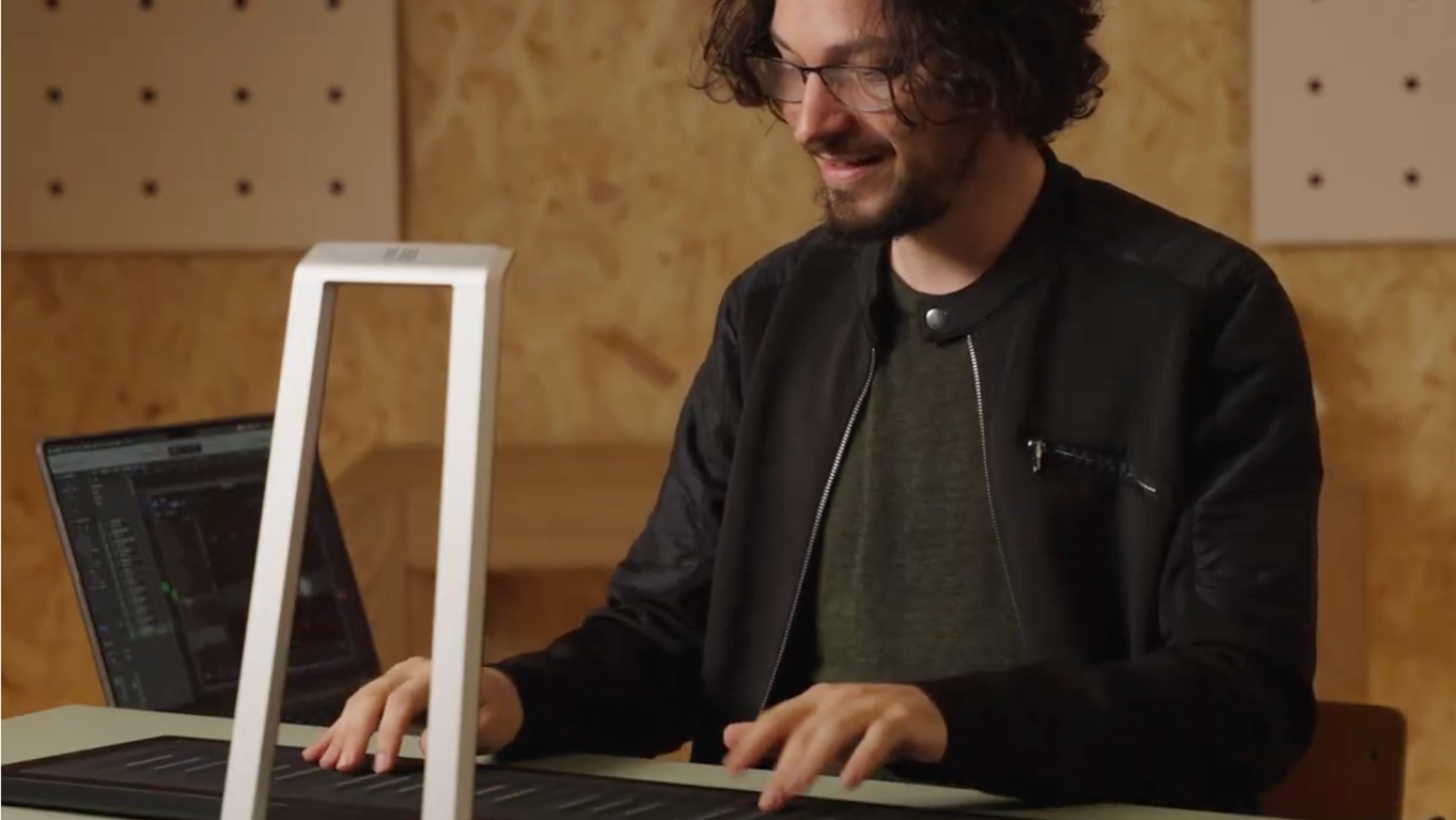
Sam Gutman's Top 10 Airwave Sounds
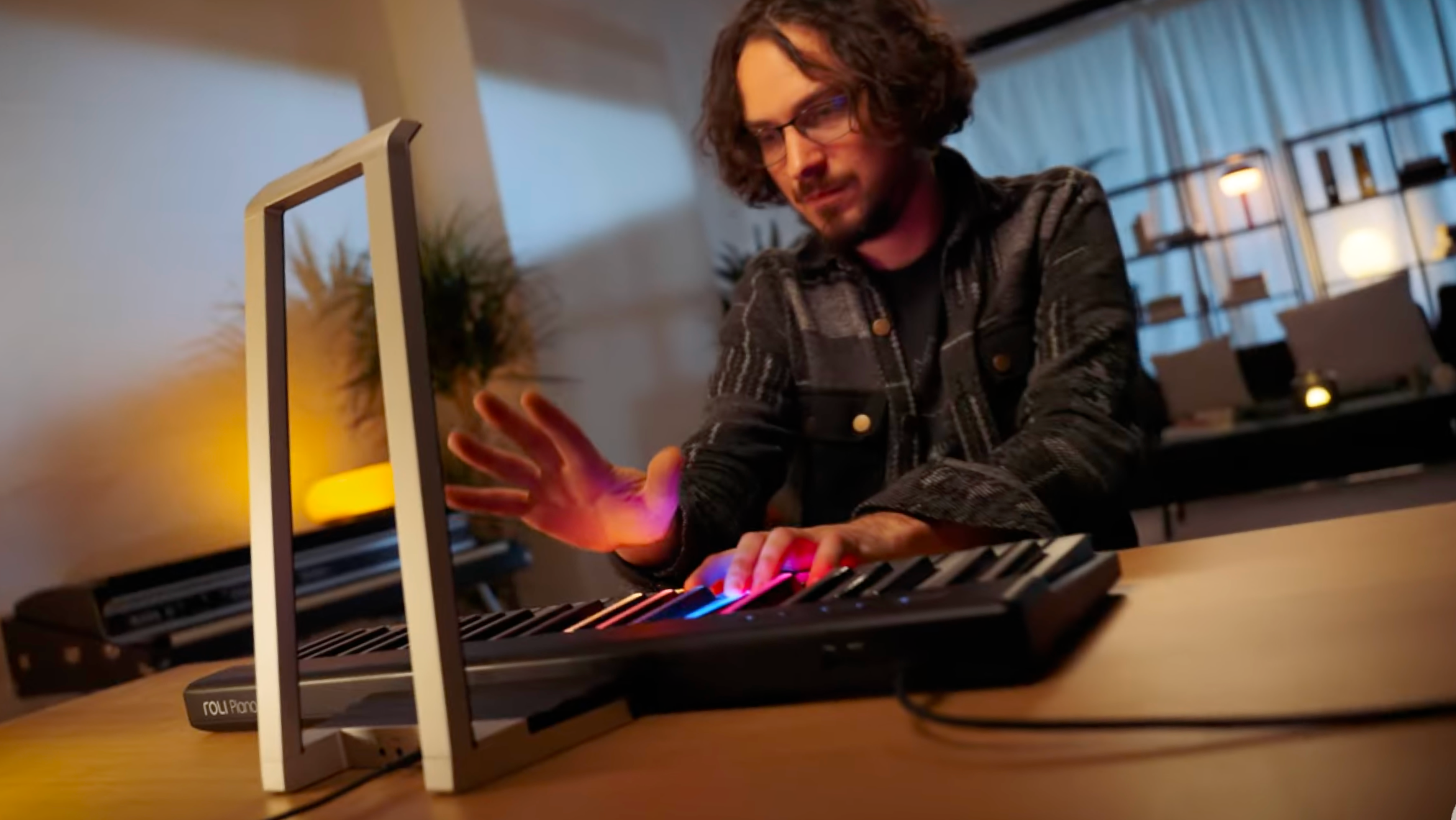
Sam Gutman stuns with Airwave, Seaboard 2 and ROLI Piano.
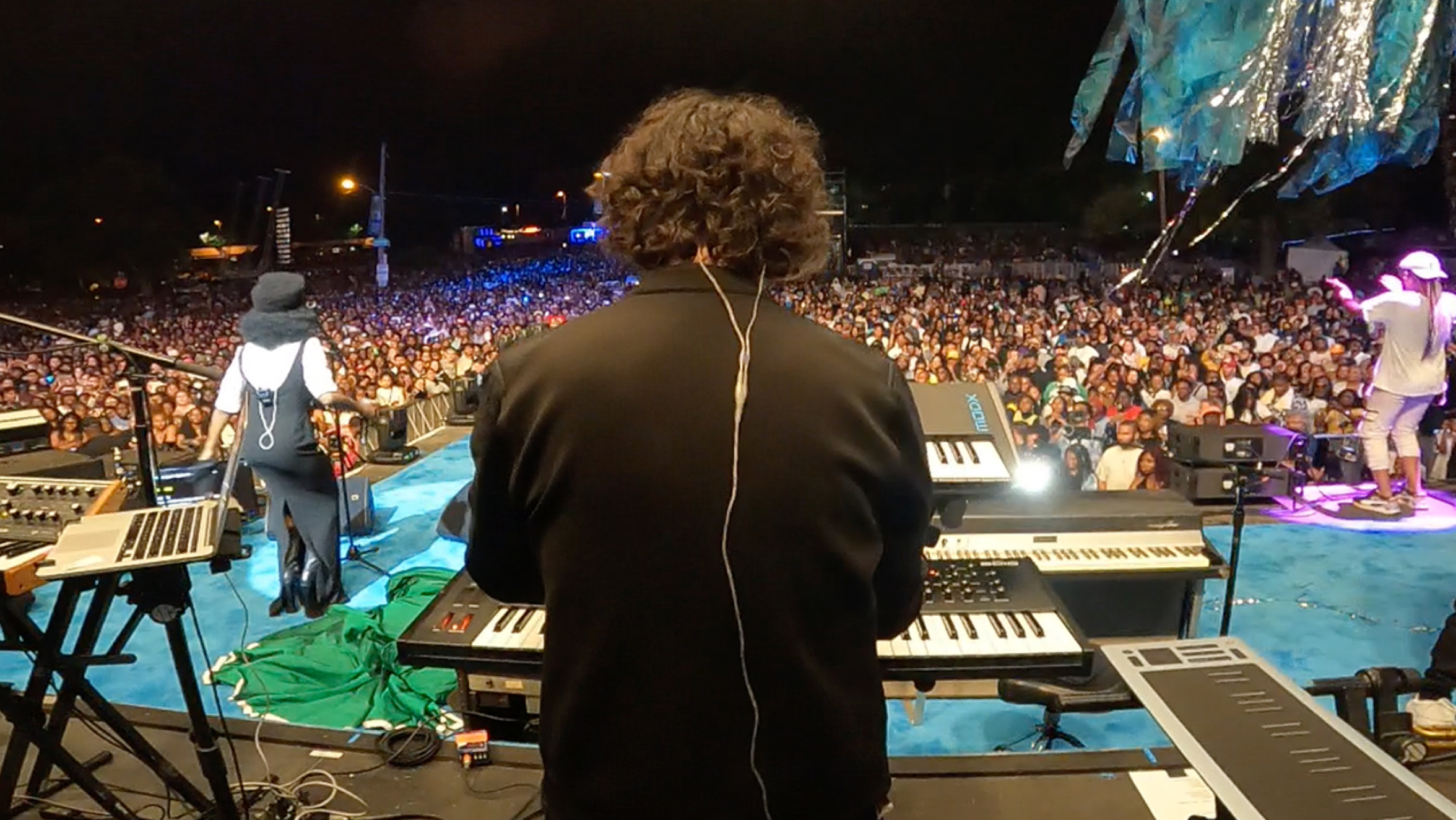
Sam Gutman: "I feel inspired to make music. This is blowing my mind."
Exploring sound in every gesture with Sam Gutman and Seaboard 2
ROLI Meets Sam Gutman: Using the Seaboard RISE 2 on tour
Sampling on Safari with Sam Gutman and Equator2
Join the ROLI community